
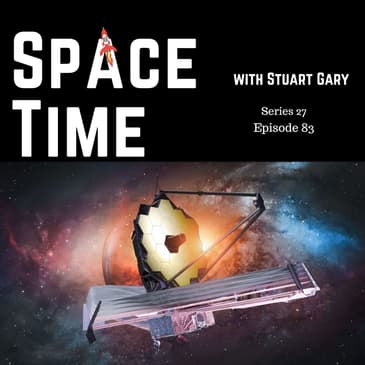



First, NASA's Webb Space Telescope has identified luminous, very red objects from the early universe, challenging conventional models of galaxy and supermassive black hole formation. These mysterious objects, dating back to 600-800 million years after the Big Bang, contain ancient stars and massive black holes, suggesting an unexpectedly rapid formation in the young universe. The findings, published in the Astrophysical Journal, reveal that these objects are galaxies more than 13 billion years old, packed with stars and supermassive black holes far larger than those in our Milky Way galaxy.
Next, NASA's Mars Odyssey spacecraft has set a new record with 100,000 orbits around the red planet. This 23-year-old orbiter has been instrumental in mapping Mars' surface, identifying landing sites, and relaying data from rovers and landers. A recent image of Olympus Mons, the tallest volcano in the solar system, offers stunning new insights into the Martian atmosphere, showcasing layers of dust and water ice clouds.
Finally, SpaceX has been selected to deorbit and destroy the International Space Station (ISS) in 2030. The ISS, launched in 1998, has provided humanity's first permanent habitation in space. SpaceX will develop a specialised orbital tug to lower the ISS in a controlled re-entry, ensuring most of it burns up in the atmosphere, with remnants splashing down in the remote Point Nemo.
Sponsor Offer: This episode is proudly supported by Malwarebytes....online security at it's most effective. Secure your digital journey across the cosmos with a service you can trust to find and crush all the 'nasties'. Find your stellar security solution at https://www.bitesz.com/malwarebytes...and note....for a very limited time you get Malwarebytes for 50% off!
Listen to SpaceTime on your favourite podcast app including Apple Podcasts, Spotify, YouTube Music, or wherever you get your podcasts.
Support SpaceTime: Become a supporter of SpaceTime: https://www.bitesz.com/show/spacetime/support/
www.bitesz.com
[00:00:00] This is SpaceTime Series 27 Episode 83, for broadcast on the 10th of July 2024. Coming up on SpaceTime, bright objects discovered at the dawn of the universe baffling scientists, NASA's Mars Odyssey spacecraft setting a new orbital record around the Red Planet, and SpaceX selected to destroy the International Space Station.
[00:00:23] All that and more coming up on SpaceTime. Welcome to SpaceTime with Stuart Gary. A recent discovery by NASA's Webb Space Telescopes confirmed that luminous very-red objects, previously identified in the early universe, upends conventional thinking about the origins
[00:00:56] and evolution of galaxies and their supermassive black holes. Astronomers identified these three mysterious objects in the early universe dating back to around 600 to 800 million years after the Big Bang, a time when the universe was only 5% of its current age. To work out what's going on,
[00:01:16] the authors stated spectral measurements, or the intensity of different wavelengths of light, emitted from each of the objects. Their analysis found signatures for some very old stars, hundreds of millions of years old, in fact far older than expected in such a young universe.
[00:01:31] The authors were also surprised to discover signatures for huge supermassive black holes in the same objects, estimating that they were somewhere between 100 and 1000 times more massive than the supermassive black hole in our own Milky Way galaxy. Reporting in the Astrophysical Journal,
[00:01:47] the authors point out that neither of these are expected in current models of galaxy growth and supermassive black hole formation. These current models all hypothesize that both galaxies and their central supermassive black holes tend to grow together over billions of years.
[00:02:03] The study's lead author, Benji Wang from Penn State University, says these three ancient objects each appear to be packed with ancient stars, hundreds of millions of years old, in a universe that's only 600 to 800 million years old. Wang says it was totally unexpected to find such old stars
[00:02:21] in such a young universe. Problem is, standard models of cosmology and galaxy formation have all been incredibly successful, yet these luminous objects simply don't fit comfortably into those theories. The authors first spotted these objects back in July of 2022. They were included in the
[00:02:38] initial data set released by Webb, and the team published a paper in Nature several months later announcing their discovery. At the time, the authors suspected these objects were galaxies. They followed up their analysis by taking a spectra to better understand the true distances
[00:02:54] of the objects as well as the source powering their immense light. The authors then used this new data to draw a clearer picture of what the galaxies looked like and what was inside them.
[00:03:04] Not only did they confirm that these objects were indeed galaxies near the beginning of time, each more than 13 billion years old, but they also found evidence of surprisingly large supermassive black holes and a surprisingly old population of stars. Wang says you can make all this uncomfortably
[00:03:21] fit into the current model of cosmology, but only if you include some really exotic, insanely rapid formation at the beginning of time. The Webb Space Telescope's equipped with infrared sensing instruments capable of detecting light that was emitted from the most ancient stars and galaxies.
[00:03:38] Essentially, the telescope allows scientists to see back in time roughly 13.5 billion years. And that's just 300 million years after the beginning of the universe, when the Big Bang happened some 13.8 billion years ago. Now one of the challenges in analysing such ancient light is
[00:03:56] that it can be really hard to differentiate between the types of objects that could be emitting that light. Luckily in the case of these specific objects, the authors have clear characteristics of both supermassive black holes and very ancient stars. The problem is it's not really clear how
[00:04:12] much of the observed light comes from each, meaning that these could be early galaxies that are unexpectedly old and even more massive than our own Milky Way galaxy, forming far earlier than models predict. Or they could be more normal mass galaxies, but with oversized supermassive black
[00:04:28] holes, roughly 100 to 1000 times more massive than a similar-sized galaxy would have today. Wang says distinguishing between light from material falling into a black hole, from the light being emitted by stars in these tiny distant objects was challenging.
[00:04:43] And that inability to tell the difference in the current data set left ample room for interpretation of these objects. Another problem is that if part of this light is indeed from supermassive black holes, then these can't be normal supermassive black holes. That's because
[00:04:58] they're producing far more ultraviolet photons than expected, lacking the characteristic signatures such as lots of hot dust and bright x-ray emissions. But still the most surprising thing is how big they seem to be, how massive they are. Normally supermassive black holes are paired with galaxies.
[00:05:15] The two grow up together. Each galaxy has a supermassive black hole at its center, and they go through their life experiences together. But here we have a fully formed adult black hole living
[00:05:26] inside what should be an infant galaxy. The authors were also perplexed by the incredibly small size of these systems. They're only a few hundred light years across. That's roughly a thousand times smaller than our Milky Way galaxy. Yet they contain as many stars as our galaxy. That's somewhere
[00:05:42] between 10 billion and a trillion. But it's all contained in this volume a thousand times smaller than the Milky Way. Let me put it this way. If you took the Milky Way and compressed it down to the
[00:05:52] size of these ancient galaxies, then the nearest neighboring stars to the Sun would be almost within our own solar system, as close as Neptune. Rather than well over 4.2 light years away, which is the
[00:06:04] case for Proxima Centauri, the nearest star to the Sun. Now sticking with the same analogy, it means the supermassive black hole at the center of the Milky Way, which is about 27,000 light years from
[00:06:14] the Earth, would actually only be 27 light years away. That means it would be clearly visible from Earth as a giant pillar of light. In fact these early galaxies must be so dense with stars, the
[00:06:26] stars must have formed in ways that astronomers can't yet comprehend, under conditions that we'd never expect to see during a period in which we'd never expect to see them. And for whatever reason, the universe suddenly stopped making objects like these after just a couple of billion years.
[00:06:42] And we don't know why that happened either. Truly it was a unique time in the early universe. This is Space Time. Still to come, NASA's Mars Odyssey spacecraft sets a new orbital record around the red planet, and you gotta love this headline, SpaceX selected to destroy
[00:07:01] the International Space Station. All that and more still to come on Space Time. NASA's Mars Odyssey spacecraft just set a new milestone, completing a record 100,000 orbits around the red planet. The 23-year-old orbit is currently taking images that offer horizon-wide
[00:07:34] views of Mars, similar to what astronauts aboard the International Space Station see as they orbit the Earth. During its 23 years in service, Odyssey's been mapping minerals and ice across the Martian surface, identifying potential landing sites for future missions and relaying
[00:07:49] data to Earth from the rovers and landers on the surface. Now scientists have used the orbiter's camera to take a stunning new image of Olympus Mons, the tallest volcano in the solar system.
[00:08:01] The image is part of a continuing effort by the Odyssey team to provide high-altitude views of the planet's horizon. The view enables scientists to learn more about the clouds and airborne dust in the Martian atmosphere. Taken on March 11, the most recent horizon image captures Olympus Mons in
[00:08:18] all its glory. With a base that sprawls over 600 kilometers, this giant shield volcano rises to a height of 27 kilometers. Odyssey project scientist Jeff Plout from NASA's Jet Propulsion Laboratory in Pasadena, California says that normally we see Olympus Mons in narrow strips from above,
[00:08:38] but by turning the spacecraft on its side towards the horizon we get to see a single image showing us just how large Olympus Mons looms over the landscape. Not only is the image spectacular, but it's providing scientists with unique science data. In addition to offering a
[00:08:54] freeze frame of clouds and dust, these images when taken across many seasons also give scientists a more detailed understanding of the Martian atmosphere. Picture shows a bluish-white band at the bottom of the atmosphere. That hints at how much dust was present at this location during
[00:09:09] what is the Martian early autumn. That's a period when dust storms typically start kicking up. A purplish layer above was likely due to a mixture of the planet's red dust with some
[00:09:20] bluish water ice clouds. And finally above that, towards the top of the image, is a bluish green layer where water ice clouds reach up some 50 kilometers into the sky. The orbiter captured the image with a heat-sensitive camera called the Thermal Emissions Imaging System, which was built
[00:09:37] by Arizona State University. But because the camera is designed to look straight down onto the Martian surface, getting an horizon shot takes a lot of extra planning. By firing the thrusters located around the spacecraft, Odyssey can point its camera at different parts of the surface or
[00:09:53] even slowly roll over to view Mars's tiny moons Phobos and Deimos. The recent horizon imaging was originally conceived as an experiment during the landings of NASA's Phoenix mission in 2008 and the Curiosity mission in 2012. As with other Mars landings before and after these missions touched
[00:10:12] down, Odyssey played an important role relaying data as the spacecraft barreled towards the Martian surface. But to relay their vital data back to Earth, Odyssey's antenna had to be aimed towards the newly arriving spacecraft and their landing ellipses. Scientists were intrigued when they
[00:10:27] noticed that positioning Odyssey's antenna for landings meant that the Thermal Emissions Imaging System would be pointing towards the planet's horizon. So they decided to turn the camera on see how it looked. Based on those experiments, they then designed a sequence that
[00:10:42] keeps the Thermal Emissions Imaging System field of view centered on the horizon as the spacecraft orbits around the planet. This report from NASA TV. Imagine you're an astronaut in the International Space Station. But instead of being in orbit around Earth, you're in orbit around Mars. We just
[00:11:02] took a bunch of new images that show exactly how the planet Mars would look from that exact same perspective. If you were an astronaut, the first thing that would catch your eye are all of these
[00:11:12] beautiful craters, which of course look much different than what you would see on Earth. But the second thing you would see because you're looking at the planet from an angle is the structure in these beautiful clouds. And because Mars Odyssey has a heat vision camera, it can
[00:11:25] actually tell the difference between different kinds of clouds. On Mars we have CO2 ice clouds, we have water ice clouds, and we have dust clouds. In order to get these images, we had to do
[00:11:36] something with the spacecraft that we've never done before. Usually our camera faces straight down for mapping. In the past, we've experimented with rolling the spacecraft out so that we can catch pictures
[00:11:47] of some of Mars's moons, like Phobos, a potato-shaped beautiful moon that you might have heard of. But this time we had to do something a little more extreme. We had to rotate the spacecraft all the
[00:11:56] way to the horizon, then we had to keep it that way for an entire orbit. Odyssey has been going strong for years. We have ignition and lift off, carrying NASA on an odyssey back to Mars. That makes it the
[00:12:08] longest lasting spacecraft that has ever been sent to visit Mars. We also have several ongoing science campaigns. One is a rock mapping campaign that will help us land future missions more safely on the surface. We're also taking advantage of our special dawn-dusk orbit to map clouds, fog, and
[00:12:26] frost that only exists at certain times a day. And we are also planning our next maneuver to look out at the clouds on the horizon again. This is Space Time. Still to come, SpaceX selected to destroy
[00:12:41] the International Space Station. And later in the science report, anthropologists discover the world's earliest known evidence of storytelling and art. All that and more still to come on Space Time. NASA has selected SpaceX to bring down and destroy the International Space Station at the end of its
[00:13:15] mission in 2030. With its first modules launched way back in 1998, the 430 ton orbiting outpost is the most expensive science project ever undertaken. And it's provided humans with their first permanent habitation in space. In fact, thanks to the International Space Station or the
[00:13:34] ISS as it's commonly called, more than half the population of planet Earth haven't known a time when humans didn't permanently inhabit space. The new SpaceX contract will see the development of a specialized orbital tug or deorbit vehicle which will be attached to the space station. When the
[00:13:51] time comes, it'll gradually lower the space station in a controlled manner, allowing it to mostly burn up as it re-enters the Earth's atmosphere. Because it's the largest object ever sent into space, the space station will be the largest object ever deorbited. The previous record holder was Russia's
[00:14:07] Mir space station. NASA engineers expect the ISS to break up in three primary stages. Now based on observations of how both the Mir and the earlier American Skylab space stations disintegrated on their atmospheric re-entry, the massive solar arrays and radiators on the ISS will tear off first.
[00:14:27] That'll be followed by the individual modules tearing away from the main truss, the station's backbone structure. Finally, the truss and the modules themselves will start to break open, fall apart. While most will disintegrate as they burn up in the atmosphere, larger titanium and
[00:14:42] stainless steel components should survive, eventually splashing down in the southeastern Pacific Ocean at a place identified as Point Nemo. Point Nemo is one of the most remote places on Earth, well clear of shipping and airline routes, and specifically designated as a spacecraft graveyard.
[00:15:00] The United States, Japan, Canada and participating countries of the European Space Agency will continue operating the orbital outpost until the end comes. However, the final member of the ISS team, Russia, have only committed to continuing with the space station until 2028. That's when they expect to
[00:15:17] have their own new space station flying. Mind you, they originally said they'd leave this year, but as with all things Russian, there've been ongoing delays with building the first components of the new
[00:15:27] space station. So the current break-off year now is 2028, but I wouldn't put money on that. Meanwhile, several companies are building their own commercial space stations, often with help from NASA, including both Axiom Space and Blue Origin. So, countdown to the end of the International
[00:15:44] Space Station has now officially begun. This is Space Time. And time now to take another brief look at some of the other stories making news in science this week with a science report. A new study has confirmed that last year's cyclone Ilsa probably killed between 80 and 90 percent of
[00:16:17] three seabird species on Western Australia's Bidout Island. A new report in the Journal Communications Earth and Environment has found that the increasing threat of cyclones caused by climate change means future similar events may be even harder to recover from. Bidout Island was hit
[00:16:34] by the Category 5 cyclone Ilsa in April 2023. Researchers spent the next couple of months conducting aerial and ground surveys in order to estimate how many seabirds were killed in the area. They found at least 20,000 birds died across the three primary species, and most were adult
[00:16:53] breeding pairs. The authors warn that climate change will likely increase the frequency of cyclones such as these, and this increased frequency could mean seabird populations simply won't have enough time to recover from extreme losses in time for the next generation.
[00:17:10] Archaeologists have uncovered what may be the oldest known evidence of storytelling in art in a limestone cave on the Indonesian island of Sulawesi. The paintings described in the journal Nature are at least 51,200 years old. They depict three human-like figures and a wild pig. Scientists
[00:17:29] determined the age of the petrographs based on a new uranium-thorium analysis to date layers of calcium carbonate which were gradually forming over the top of the images. The authors say the discovery represents the oldest known reliably dated cave art image in the world and the earliest
[00:17:45] narrative of art found anywhere. Well, despite what they claim, it seems the British university examination system really can't tell the difference between tests taken by students and those taken by artificial intelligence. A report in the journal PLOS One found that when researchers put up a
[00:18:02] series of AI-generated submissions, reputable universities failed to detect almost all of them. The authors had produced 33 students' worth of answers that were 100% written by AI and submitted it to the examination system from the university's School of Psychology and Clinical Language Sciences.
[00:18:20] They found that 94% of AI submissions went undetected and on average would have earned higher grades than the real students' answers. The Australian federal government has been looking at new age verification technology to try and keep kids off harmful social media sites until they're
[00:18:38] over the age of 16. But the big problem is how does one do this without linking it to some sort of digital ID system and the Orwellian Big Brother implications for your privacy which is associated
[00:18:50] with that? Right now the digital ID system being introduced by the federal government is voluntary. In reality, governments and big business have been trying to get as much information on you as they can for years and that's not a good thing. As we saw during the COVID-19 pandemic,
[00:19:07] that information is then being used by authorities to monitor and control everything you do, from freezing your bank accounts as they did to truckers in Canada to arresting you because they don't like your free speech as Victoria Police did in Australia. And none of these measures are going
[00:19:22] to stop tech-savvy kids from getting around the problem. With a look at the issue and the problems involved, we're joined by technology editor Alex Sahara-Broyd from TechAdvice.life. Kids are experts at getting around most restrictions. You tell a child they cannot have or do something and
[00:19:37] of course the desire to have or do that goes up even further. What's the sort of technology being looked at? In May, the federal Australian government announced an age assurance trial. This will use both age verification and age estimation technologies and this is to explore their
[00:19:52] efficacy in protecting children from encountering pornography and other high-impact online content such as violence or self-harm or suicide. The Ethectic Commissioner is giving these directions and directives, trying to get the industry to come up with their own solution so she can figure out
[00:20:06] what to do. So they're going to basically look at a photo that you send them of yours, allegedly yourself, and they'll decide, yep, you're under 16 by the looks of this photo, here are the key
[00:20:14] points that we think make you under 16. So in March 2023, which is already more than a year ago, the Ethectic Commissioner submitted a roadmap on age verification to the Australian government for consideration. My understanding is it's going to be based on a photo ID and that can be
[00:20:29] quoted directly. That can be hacked. Yeah, well of course. Basically you won't be able to go online unless everything is known about you. Yeah. Once they have your driver's license or your Medicare
[00:20:37] card number or something like that, then all the anonymity that people had online suddenly is gone forever. Yeah, yeah. And that's what they don't want to admit and they're certainly not going to
[00:20:46] admit it before the next election. No. The Ethetic Commissioner is being vague as to exactly which technologies they want to use. They say they have an independent test lab and they will review age assurance technologies available on the market, including biometric, which is age and voice
[00:21:01] estimation, and identity document ID-based tools, and also have a recent European age assurance pilot and international standards for age assurance that they're going to rely on. So they really don't know exactly what they want to use. And the question is, I mean, this removes anonymity
[00:21:16] from the internet completely. So who will want to use the internet if every single move that they're making online is being tracked? And then of course is what the government wants to do with CBDC, Central Bank Digital Parentheses. That's why we have VPNs because that stops the government
[00:21:32] from accessing the metadata of every website and online service that you visit, whether it's your phone company or your internet provider, and it could be the same. So this is an Orwellian in its
[00:21:42] scope and if you actually get in the industry to try and give itself enough rope to come up with ways of spying on people, the government can say, okay, we'll accept your recommendations and thanks
[00:21:52] for helping us spy on all your customers. And of course the other side of that is it's going to make a great black market for people who will sell phones which already have a specific adult ID on
[00:22:01] them so kids can log on to any social media, that porn site or anything else they want to that way. Yeah look, the unintended consequences of government actions, they're legendary and this will yet be
[00:22:10] another great example of that happening and hopefully we have a political party in Australia will stand up and block the creation of digital IDs and Central Bank Digital Parentheses and will disband the e-safety commissioner who is American and understands free speech and yet, you know,
[00:22:26] she says it doesn't apply in Australia. Yeah but she used to work for Twitter and we all know how bad Twitter was. She was approached by the CIA to become a worker for them. Well,
[00:22:35] she says she was approached by the CIA. Well, she said she turned it down because she didn't want to lie to her friends what she was doing. What we saw was happening with Twitter 1.0 which was a mouthpiece
[00:22:45] for the CIA and we saw that through the release of the Twitter files there was this massive censorship going on. And the other big news, a new record set in data transfer. Tell me about it. Yeah,
[00:22:55] this is Aston University. They actually came out with 301 terabits transmitted using a single standard optical fibre. Now this is the optical glass tubes that are running across the floors of oceans with the submarine caps but also running into people's houses through fibre to
[00:23:13] the premises and what they've just done is announced 402 terabits. Now this is vastly faster than 50 or 100 megabits connections many people have. Some people have one gigabit connections which is a thousand megabits. Now a thousand gigabits is one terabit and here we're talking about 402
[00:23:33] of them and you could send every movie in existence, you know, in the blink of an eye, in a millisecond to somebody's computer. If the hard disk and the Wi-Fi and the Ethernet cables
[00:23:44] could actually run that fast, this is actually much faster than the world needs at present but because of the insatiable demand for bandwidth, for AI, for data transfer, for future holography and potential teleportation and all the things that, you know, we're doing it's great that the
[00:24:00] standard non-operated cable systems, fibre systems that we have can actually transmit and receive this much data. It just means that the rest of the ecosystem has to catch up but look, this is a good problem to have. That's Alex Sahara-Vroid from TechAdvice.life
[00:24:16] and that's the show for now. Space Time is available every Monday, Wednesday and Friday through Apple Podcasts iTunes, Stitcher, Google Podcasts, Pocket Casts, Spotify, Acast, Amazon Music, Bytes.com, SoundCloud, YouTube, your favourite podcast download provider and from
[00:24:49] spacetimewithstuartgarry.com. Space Time is also broadcast through the National Science Foundation on Science Zone Radio and on both iHeart Radio and TuneIn Radio. And you can help to support our show by visiting the Space Time store for a range of promotional merchandising goodies, or by becoming
[00:25:07] a Space Time Patron which gives you access to triple episode commercial free versions of the show as well as lots of bonus audio content which doesn't go to air, access to our exclusive Facebook
[00:25:18] group and other rewards. Just go to spacetimewithstuartgarry.com for full details. And if you want more Space Time, please check out our blog where you'll find all the stuff we couldn't fit in the show,
[00:25:29] as well as heaps of images, news stories, loads of videos and things on the web I find interesting or amusing. Just go to spacetimewithstuartgarry.tumblr.com. That's all one word and that's Tumblr
[00:25:42] without the E. You can also follow us through at Stuart Garry on Twitter, at Spacetime with Stuart Garry on Instagram, through our Space Time YouTube channel and on Facebook just go to facebook.com forward slash spacetimewithstuartgarry. You've been listening to Space Time with Stuart Garry.
[00:26:01] This has been another quality podcast production from bytes.com