



Become a supporter of this podcast: https://www.spreaker.com/podcast/spacetime-with-stuart-gary--2458531/support.
00:00:00 --> 00:00:02 Stuart Gary: This is space Time Series 29, Episode
00:00:02 --> 00:00:04 75 for broadcast on 24
00:00:05 --> 00:00:07 June 2026. Coming up on
00:00:07 --> 00:00:10 Space, the moon's oldest and largest
00:00:10 --> 00:00:13 impact crater. Uh, new clues about how the
00:00:13 --> 00:00:16 red planet Mars evolved and NASA's new
00:00:16 --> 00:00:19 mission to boost the Swift spacecraft back
00:00:19 --> 00:00:21 into a higher orbit. All that and more
00:00:21 --> 00:00:24 coming up on, uh, Space Time.
00:00:25 --> 00:00:28 Stuart Gary: Welcome to Space Time with Stuart
00:00:28 --> 00:00:28 Gar.
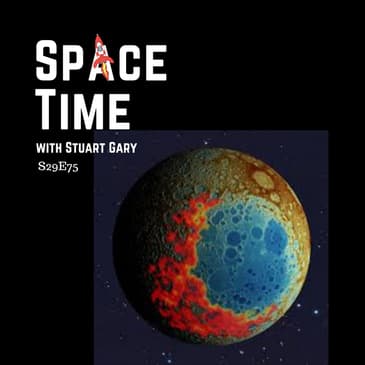
00:00:44 --> 00:00:46 Stuart Gary: A new study suggests that the moon's oldest
00:00:46 --> 00:00:49 and largest impact crater, the two and a half
00:00:49 --> 00:00:51 thousand kilometre wide south pole Aiken
00:00:51 --> 00:00:53 Basin, could have excavated material so deep
00:00:53 --> 00:00:56 it included parts of the lunar mantle. The
00:00:56 --> 00:00:58 findings, reported in the journal Science
00:00:58 --> 00:01:01 Advances and Geophysical Research Planets,
00:01:01 --> 00:01:03 provides fresh insights into the early
00:01:03 --> 00:01:05 evolution evolution of our solar system and
00:01:05 --> 00:01:07 what the Artemis astronauts will encounter
00:01:07 --> 00:01:09 when they land at the lunar south pole in
00:01:09 --> 00:01:12 2028. One of the
00:01:12 --> 00:01:14 study's authors, William Bottke from the
00:01:14 --> 00:01:16 Southwest Research Institute in Boulder,
00:01:16 --> 00:01:18 Colorado, says the collision struck the lunar
00:01:18 --> 00:01:20 surface with so much force that it may have
00:01:20 --> 00:01:23 excavated material from deep inside the moon,
00:01:23 --> 00:01:26 including portions of the lunar mantle. Using
00:01:26 --> 00:01:29 advanced models and simulations, Bottke and
00:01:29 --> 00:01:31 colleagues recreated the crater forming
00:01:31 --> 00:01:33 impact and identified new evidence about the
00:01:33 --> 00:01:36 direction and composition of that struck the
00:01:36 --> 00:01:39 moon. Their work shows the best fit was an
00:01:39 --> 00:01:41 impactor approaching from the north and
00:01:41 --> 00:01:43 travelling south, hitting at a low angle and
00:01:43 --> 00:01:45 producing the elongated tapered shape of the
00:01:45 --> 00:01:48 basin. The modelling suggests the
00:01:48 --> 00:01:51 impactor wasn't a simple uniform body, but a
00:01:51 --> 00:01:53 differentiated object with an eyeing course
00:01:53 --> 00:01:55 surrounded by rock. In other words, it could
00:01:55 --> 00:01:57 have been a small protoplanet or a large
00:01:57 --> 00:02:00 differentiated asteroid. As the
00:02:00 --> 00:02:02 impactor slammed into the moon at a low
00:02:02 --> 00:02:05 angle, it excavated a deep asymmetric cavity
00:02:05 --> 00:02:08 and melted the rock in the central basin. The
00:02:08 --> 00:02:10 collision lofted large amounts of material
00:02:10 --> 00:02:13 from both the lunar crust and mantle, which
00:02:13 --> 00:02:15 later settled back onto the basin floor.
00:02:16 --> 00:02:18 The authors also analysed how this ejector
00:02:18 --> 00:02:20 would have been distributed beneath and
00:02:20 --> 00:02:22 around the basin. They compared high
00:02:22 --> 00:02:25 resolution gravity data uh with models that
00:02:25 --> 00:02:27 included both crustal and mantle material,
00:02:27 --> 00:02:29 determining that the basin likely contained
00:02:29 --> 00:02:31 substantial amounts of mantle derived rock
00:02:31 --> 00:02:34 within its interior and mixed into the
00:02:34 --> 00:02:36 ejector blanket surrounding the crater. A few
00:02:36 --> 00:02:39 subsequent impacts within the basin appear to
00:02:39 --> 00:02:41 have later excavated these underlying matter
00:02:41 --> 00:02:43 deposits, bringing some of this material to
00:02:43 --> 00:02:45 the surface where it is lying there, ready to
00:02:45 --> 00:02:47 be sampled by robotic rovers or people on
00:02:47 --> 00:02:50 future missions. Earlier theories
00:02:50 --> 00:02:52 had suggested that the deepest ejector might
00:02:52 --> 00:02:55 be confined to parts of the basin far uh from
00:02:55 --> 00:02:57 the proposed south pole exploration zones.
00:02:58 --> 00:03:00 However, these new simulations and gravity
00:03:00 --> 00:03:02 modelling indicates that key deposits of
00:03:02 --> 00:03:05 mantle bearing ejecta may well blanket
00:03:05 --> 00:03:07 portions of the lunar south pole right where
00:03:07 --> 00:03:10 the astronauts will land. The research is
00:03:10 --> 00:03:11 fascinating because it's telling mission
00:03:11 --> 00:03:14 managers exactly where to look for samples
00:03:14 --> 00:03:16 which could answer some of our biggest
00:03:16 --> 00:03:18 questions about the Moon's origin and
00:03:18 --> 00:03:21 evolution, and consequently, about the
00:03:21 --> 00:03:23 evolution of the inner solar system.
00:03:24 --> 00:03:26 This is space time. Still to
00:03:26 --> 00:03:29 come, new clues about how the Red Planet Mars
00:03:29 --> 00:03:31 evolved, and NASA's new mission to boost the
00:03:31 --> 00:03:34 Swift Space Telescope up into a higher orbit.
00:03:35 --> 00:03:37 All that and more still to come on, uh, space
00:03:37 --> 00:03:38 time.
00:03:53 --> 00:03:56 Scientists have discovered the mineral garnet
00:03:56 --> 00:03:58 in the Martian meteorite. And these findings
00:03:58 --> 00:04:00 may help reveal how the Red Planet evolved
00:04:00 --> 00:04:03 billions of years ago. You see, garnet is
00:04:03 --> 00:04:05 a completely new type of rock from the Red
00:04:05 --> 00:04:07 Planet, and it offers a rare glimpse into the
00:04:07 --> 00:04:10 ancient Martian past. The findings,
00:04:10 --> 00:04:12 reported in the journal Geochemical
00:04:12 --> 00:04:14 Perspectives Letters, could help researchers
00:04:14 --> 00:04:17 piece together the planet's 4.5 billion year
00:04:17 --> 00:04:20 geological history. It offers a new time
00:04:20 --> 00:04:22 capsule, reserving clues about the
00:04:22 --> 00:04:24 temperatures, pressures, and processes that
00:04:24 --> 00:04:26 shaped the Red Planet billions of years ago.
00:04:27 --> 00:04:30 Garnet is a dark red gem. It was
00:04:30 --> 00:04:33 popular in ancient Egypt, with the Romans and
00:04:33 --> 00:04:35 with the Victorian elite. It's also the
00:04:35 --> 00:04:37 January birthstone, and it's a
00:04:37 --> 00:04:40 cornerstone mineral in geology, providing a
00:04:40 --> 00:04:42 powerful record of the tectonic forces, ore
00:04:42 --> 00:04:44 forming processes, and fluid rock
00:04:44 --> 00:04:46 interactions that shape the Earth's crust and
00:04:46 --> 00:04:49 mantle. One of the study's authors, James
00:04:49 --> 00:04:51 Darling from the University of Portsmouth,
00:04:51 --> 00:04:54 says the findings add striking new dimensions
00:04:54 --> 00:04:56 to science's understanding of the geology of
00:04:56 --> 00:04:58 Mars, and they open up a new window into its
00:04:58 --> 00:05:01 evolution. Evolution. Garnet bearing rock
00:05:01 --> 00:05:03 could provide clues about how Mars has
00:05:03 --> 00:05:05 changed throughout its history and provide
00:05:05 --> 00:05:07 new insights into the ancient environments
00:05:07 --> 00:05:09 that could have formed the garnet and related
00:05:09 --> 00:05:12 minerals. The garnet was discovered
00:05:12 --> 00:05:14 during an analysis of a fragment of a Martian
00:05:14 --> 00:05:15 meteorite known as
00:05:15 --> 00:05:18 NWA8171.
00:05:18 --> 00:05:20 The authors originally thought the sample was
00:05:20 --> 00:05:23 simply common pyroxene, But a more detailed
00:05:23 --> 00:05:25 examination using electron microscopy and
00:05:25 --> 00:05:28 microanalysis discovered it to be garnet, a
00:05:28 --> 00:05:30 mineral that had not been identified en masse
00:05:30 --> 00:05:33 before. Garnet is a classic
00:05:33 --> 00:05:35 example of a mineral often found in
00:05:35 --> 00:05:38 metamorphic rocks on Earth. The process of
00:05:38 --> 00:05:40 metamorphism transforms igneous or
00:05:40 --> 00:05:42 sedimentary rocks into a new form through
00:05:42 --> 00:05:45 exposure to extreme heat, high pressure, or
00:05:45 --> 00:05:48 hot fluids. On Mars, the heat and
00:05:48 --> 00:05:49 pressure needed to produce scarlet through
00:05:49 --> 00:05:51 metamorphism could have come from the impact
00:05:51 --> 00:05:54 of a meteor hitting the surface, or from
00:05:54 --> 00:05:56 magma rising up into the crust, or from both.
00:05:57 --> 00:05:59 Uh, however, the authors admit they can't
00:05:59 --> 00:06:01 rule out that the garnet bearing rock may
00:06:01 --> 00:06:03 well have been delivered to Mars and
00:06:03 --> 00:06:05 incorporated into its surface through a
00:06:05 --> 00:06:07 meteor impact. So the authors now need to
00:06:07 --> 00:06:09 study the garnet's, uh, isotopic signatures
00:06:09 --> 00:06:12 in order to verify whether it was originally
00:06:12 --> 00:06:14 produced on Mars or whether it came to Mars
00:06:14 --> 00:06:17 and consequently came to Earth from another
00:06:17 --> 00:06:20 body. Measuring oxygen isotopes
00:06:20 --> 00:06:22 from the Garnet bearing rock itself would
00:06:22 --> 00:06:24 help to confirm its origins. And
00:06:24 --> 00:06:27 needless to say, we'll keep you informed.
00:06:27 --> 00:06:30 This is space time. Still to come.
00:06:31 --> 00:06:33 NASA's new mission to try and save the Swift
00:06:33 --> 00:06:35 space Telescope by boosting it into a higher
00:06:35 --> 00:06:37 orbit. And later in the science report,
00:06:37 --> 00:06:40 discovery that humans were already using fire
00:06:40 --> 00:06:43 between 1.07 and
00:06:43 --> 00:06:45 1.79 million years ago.
00:06:45 --> 00:06:48 All that and more still to come on uh, space
00:06:48 --> 00:06:49 time.
00:06:54 --> 00:06:54 Stuart Gary: Foreign.
00:07:04 --> 00:07:06 Stuart Gary: NASA's about to launch a new mission designed
00:07:06 --> 00:07:08 to extend the life of a half billion dollar
00:07:08 --> 00:07:10 spacecraft by boosting it into a higher
00:07:10 --> 00:07:13 orbit. Catalyst Space will use its Link
00:07:13 --> 00:07:16 rescue craft to boost the orbit of NASA's
00:07:16 --> 00:07:18 Swift gamma ray Space Telescope.
00:07:18 --> 00:07:21 Swift was launched back in 2004 to study
00:07:21 --> 00:07:24 changes in the high energy universe. Things
00:07:24 --> 00:07:26 like gamma ray bursts, which are the powerful
00:07:26 --> 00:07:29 explosions in the cosmos see when a
00:07:29 --> 00:07:31 rapid sudden event takes place in the sky.
00:07:31 --> 00:07:33 Swift acts as an early warning system,
00:07:33 --> 00:07:35 providing crucial information that allows
00:07:35 --> 00:07:37 other observatories to follow up and learn
00:07:37 --> 00:07:40 more about the event and consequently how the
00:07:40 --> 00:07:42 universe works. But after 22
00:07:42 --> 00:07:45 years, Swift's 600 kilometre high orbit has
00:07:45 --> 00:07:48 begun to decay rapidly because of increased
00:07:48 --> 00:07:50 solar activity. NASA initially expected
00:07:50 --> 00:07:53 it to stay in orbit until the early2030s,
00:07:53 --> 00:07:56 but the latest peak in the Sun's 11 year
00:07:56 --> 00:07:58 solar cycle was far stronger than expected.
00:07:59 --> 00:08:02 Increased solar activity heats and swells
00:08:02 --> 00:08:04 Earth's atmosphere and that creates extra
00:08:04 --> 00:08:07 atmospheric drag on orbiting spacecraft.
00:08:07 --> 00:08:09 And that atmospheric drag will cause
00:08:09 --> 00:08:11 spacecraft orbits to decay, ultimately
00:08:11 --> 00:08:13 burning up in the atmosphere unless they're
00:08:13 --> 00:08:16 boosted back up into higher orbits. For
00:08:16 --> 00:08:18 Swift, that wasn't possible and mission
00:08:18 --> 00:08:21 managers realised the telescope was doomed in
00:08:21 --> 00:08:24 a matter of months. It's now just 370
00:08:24 --> 00:08:26 kilometres in altitude and will soon suffer
00:08:26 --> 00:08:28 enough orbital decay to re enter the
00:08:28 --> 00:08:30 atmosphere and begin burning up.
00:08:31 --> 00:08:33 But rather than allowing the mission to end,
00:08:33 --> 00:08:36 NASA decided to take this opportunity to test
00:08:36 --> 00:08:38 a new spacecraft specifically designed to
00:08:38 --> 00:08:41 attach to Swift and boost it back up to its
00:08:41 --> 00:08:44 original orbit. In September 2025,
00:08:44 --> 00:08:46 NASA awarded a contract to Catalyst Space to
00:08:46 --> 00:08:49 mount a robotic servicing mission to Swift.
00:08:49 --> 00:08:52 In less than a year, the mission will use a
00:08:52 --> 00:08:54 400 kilogramme refrigerator sized robotic
00:08:54 --> 00:08:56 rescue craft called LINK to rendezvous with
00:08:56 --> 00:08:58 Swift and boost it back up into a higher
00:08:58 --> 00:09:01 altitude. Link will be Launched
00:09:01 --> 00:09:04 aboard a Northrop Grumman Pegasus XL rocket,
00:09:05 --> 00:09:07 the Pegasus will be taken up to an altitude
00:09:07 --> 00:09:10 of about 45ft, attached to the underbelly
00:09:10 --> 00:09:12 of the converted Lockheed L1011 airliner
00:09:12 --> 00:09:15 Stargazer, which will take off from a Runway
00:09:15 --> 00:09:17 in the Marshall Islands. Once the
00:09:17 --> 00:09:19 airliner reaches the correct altitude,
00:09:19 --> 00:09:21 Pegasus will be released, ignite its own
00:09:21 --> 00:09:24 engine and climb into space. Once in
00:09:24 --> 00:09:26 orbit, Pegasus will deploy the Link rescue
00:09:26 --> 00:09:28 craft, which will then attempt to rendezvous
00:09:28 --> 00:09:30 with Swift, taking images of the spacecraft
00:09:30 --> 00:09:32 from different angles so mission managers can
00:09:32 --> 00:09:34 inspect the ageing probe for damage from
00:09:34 --> 00:09:37 debris and micrometeorites and work out how
00:09:37 --> 00:09:39 they're going to capture it. Link will then
00:09:39 --> 00:09:42 attach to Swift using its three robotic arms,
00:09:42 --> 00:09:44 and gradually, over more than six weeks,
00:09:44 --> 00:09:46 it'll use its thrusters to slowly boost the
00:09:46 --> 00:09:49 observatory back up into its 600 kilometres
00:09:49 --> 00:09:52 high orbit. It's a mission that might not
00:09:52 --> 00:09:54 only save the spacecraft, but demonstrate the
00:09:54 --> 00:09:56 possibility of extending the lives of other
00:09:56 --> 00:09:58 spacecraft through boosting, refuelling or
00:09:58 --> 00:10:01 repair work while in orbit. This report
00:10:01 --> 00:10:03 from NASA tv.
00:10:03 --> 00:10:06 Stuart Gary: NASA is working with an American startup to
00:10:06 --> 00:10:08 attempt something no one has ever achieved
00:10:09 --> 00:10:12 boost a spacecraft before it re enters the
00:10:12 --> 00:10:12 atmosphere.
00:10:13 --> 00:10:14 Stuart Gary: This is just a really different kind of
00:10:14 --> 00:10:16 mission. We can't wait long.
00:10:17 --> 00:10:20 Its orbit has been lowering. If we
00:10:20 --> 00:10:23 do nothing, Swift will re enter the
00:10:23 --> 00:10:26 atmosphere and so there's nothing to lose.
00:10:27 --> 00:10:30 Just a few months ago, this spacecraft was a
00:10:30 --> 00:10:31 conceptual drawing.
00:10:32 --> 00:10:34 Stuart Gary: Catalyst's robotic spacecraft will approach
00:10:34 --> 00:10:37 the observatory, carefully capture it
00:10:37 --> 00:10:40 and propel it to nearly its original orbit.
00:10:42 --> 00:10:44 Stuart Gary: Six months ago, this was a PowerPoint. In
00:10:44 --> 00:10:47 under a year, we're going from identification
00:10:47 --> 00:10:49 of a problem, proposal, contract
00:10:50 --> 00:10:51 award to launch.
00:10:51 --> 00:10:54 Stuart Gary: Saving Swift isn't about just preserving one
00:10:54 --> 00:10:56 mission. It's about moving forward in a
00:10:56 --> 00:10:59 future where we can give spacecraft a second
00:10:59 --> 00:10:59 life.
00:10:59 --> 00:11:02 Stuart Gary: And in that report from NASA tv, we heard
00:11:02 --> 00:11:04 from NASA Swift scientists Brad Senko and
00:11:04 --> 00:11:07 Regina Caputo, Catalyst CEO Gunhee
00:11:07 --> 00:11:09 Lee and Catalyst Link lead scientist Kerryn
00:11:09 --> 00:11:12 Wilson. This space, time.
00:11:28 --> 00:11:28 And time.
00:11:28 --> 00:11:30 Um, now for another brief look at some of the
00:11:30 --> 00:11:32 other storeys making news in science this
00:11:32 --> 00:11:35 week with the Science report. The World
00:11:35 --> 00:11:37 Meteorological Organisation has released its
00:11:37 --> 00:11:39 latest State of the Climate in Asia report,
00:11:39 --> 00:11:42 showing that ocean surface temperatures have
00:11:42 --> 00:11:45 now reached a new record. The study found
00:11:45 --> 00:11:47 the seas of Asia had warmed faster than the
00:11:47 --> 00:11:49 global average, with a mean surface
00:11:49 --> 00:11:51 temperature of around 0.96 degrees
00:11:51 --> 00:11:54 Celsius above the 1991-2020
00:11:54 --> 00:11:56 average, with China, Korea and Japan all
00:11:56 --> 00:11:58 recording their hottest summers on record.
00:11:59 --> 00:12:02 Pakistan, Sri Lanka and Vietnam experienced
00:12:02 --> 00:12:05 devastating floods and monsoons and tropical
00:12:05 --> 00:12:07 cyclone related rainfall, with over 1200
00:12:07 --> 00:12:10 deaths from flooding in Pakistan and Vietnam
00:12:10 --> 00:12:12 alone. A new
00:12:12 --> 00:12:15 study has found that people tend to undergo
00:12:15 --> 00:12:17 changes in their brains within a month after
00:12:17 --> 00:12:19 their first psychedelic experience from magic
00:12:19 --> 00:12:22 mushrooms. The findings, reported in the
00:12:22 --> 00:12:24 journal Nature Communications, involved 28
00:12:24 --> 00:12:26 healthy people who had never taken magic
00:12:26 --> 00:12:28 mushrooms before and scanned their brains
00:12:28 --> 00:12:30 within an hour of a single high dose of
00:12:30 --> 00:12:33 Psilocyphon and again a month later.
00:12:33 --> 00:12:36 The authors found that after a month, modest
00:12:36 --> 00:12:38 brain changes were visible, relating to
00:12:38 --> 00:12:40 cognitive flexibility, psychological insight
00:12:40 --> 00:12:41 and well being.
00:12:43 --> 00:12:45 Archaeologists have uncovered evidence that
00:12:45 --> 00:12:48 early humans were already using fire in South
00:12:48 --> 00:12:50 Africa's wonder work caves between
00:12:50 --> 00:12:52 1.07 and 1.79
00:12:52 --> 00:12:55 million years ago. The previous discovery
00:12:55 --> 00:12:57 of early fire in the Kalahari Desert cave
00:12:57 --> 00:12:59 system had been dated to around a million
00:12:59 --> 00:13:02 years ago. The new findings, reported in the
00:13:02 --> 00:13:04 journal plos one, extend the chronology of
00:13:04 --> 00:13:07 one of the earliest known records of fire use
00:13:07 --> 00:13:10 associated with hominids. Scientists from
00:13:10 --> 00:13:12 the Hebrew University of Jerusalem found
00:13:12 --> 00:13:15 signs of repeated fire use deep inside the
00:13:15 --> 00:13:17 cave, far beyond the reach of natural
00:13:17 --> 00:13:19 wildfires, suggesting that early humans were
00:13:19 --> 00:13:21 bringing naturally occurring fire into the
00:13:21 --> 00:13:23 cave and then maintaining it there long
00:13:23 --> 00:13:25 before they learned how to create it for
00:13:25 --> 00:13:28 themselves. To reach their conclusions, the
00:13:28 --> 00:13:30 authors used a new method based on light
00:13:30 --> 00:13:32 emitting properties of burnt bones.
00:13:33 --> 00:13:35 When illuminated at specific wavelengths of
00:13:35 --> 00:13:37 light, bones that have been exposed to
00:13:37 --> 00:13:40 intense heat emit a distinctive glow and that
00:13:40 --> 00:13:41 can be recorded by instruments.
00:13:43 --> 00:13:45 Well, we may well be heading for a Skynet
00:13:45 --> 00:13:48 future thanks to artificial intelligence, but
00:13:48 --> 00:13:49 it looks like there's a glimmer of hope on
00:13:49 --> 00:13:52 the horizon. A new study claims AI
00:13:52 --> 00:13:54 becomes more aligned with human moral
00:13:54 --> 00:13:56 reasoning, the larger and more complex it
00:13:56 --> 00:13:59 gets. The findings reported in the Journal of
00:13:59 --> 00:14:02 the Royal Society Open Science assessed 75
00:14:02 --> 00:14:04 large language models, including ChatGPT,
00:14:05 --> 00:14:07 Claude, and Deep SEQ, to see if they'd agree
00:14:07 --> 00:14:09 with human preferences when presented with
00:14:09 --> 00:14:12 life or death dilemmas. They found that the
00:14:12 --> 00:14:14 number of parameters a model was made up of
00:14:14 --> 00:14:16 affected how likely it was to agree with
00:14:16 --> 00:14:19 humans. The authors say the more complex the
00:14:19 --> 00:14:21 models were, more closely they aligned with
00:14:21 --> 00:14:24 human morality. But the improvements were
00:14:24 --> 00:14:26 gradual as the complexity increased,
00:14:28 --> 00:14:30 the dangers of lithium ion batteries may soon
00:14:30 --> 00:14:32 be a thing of the past as the next big
00:14:32 --> 00:14:34 development in battery technology called
00:14:34 --> 00:14:37 lithium titanate begins to make an inroad
00:14:37 --> 00:14:40 into the consumer market. With the details,
00:14:40 --> 00:14:41 we're joined by technology editor Alex
00:14:41 --> 00:14:44 Zaharov Roy from TechAdvice Life.
00:14:44 --> 00:14:45 Alex Zaharov-Reutt: Now, these batteries actually have been in
00:14:45 --> 00:14:47 use by NASA and the military for some
00:14:47 --> 00:14:49 decades, but they weren't commercial, uh, or
00:14:49 --> 00:14:52 commercially available because the technology
00:14:52 --> 00:14:54 just hadn't advanced to a degree that you
00:14:54 --> 00:14:56 could replicate as easily as lithium ion.
00:14:56 --> 00:14:58 Now, lithium M ion has a problem in that if
00:14:58 --> 00:15:00 you put a nail through the battery in the
00:15:00 --> 00:15:01 back of your phone, it'll have a runaway
00:15:01 --> 00:15:03 thermal reaction where you'll have this
00:15:03 --> 00:15:05 outgassing of very toxic gases. And we hear
00:15:05 --> 00:15:07 about people with scooters that they charge
00:15:07 --> 00:15:09 them inside their houses, they leave them on
00:15:09 --> 00:15:11 the charger all night. They might maybe have
00:15:11 --> 00:15:13 third party batteries or the batteries
00:15:13 --> 00:15:14 themselves have been damaged, because on
00:15:14 --> 00:15:16 scooters, you know, you're banging on kerbs
00:15:16 --> 00:15:17 and it's just a rough sort of environment for
00:15:17 --> 00:15:20 the battery and they go off. And if people
00:15:20 --> 00:15:22 have died, their houses have been burnt down.
00:15:22 --> 00:15:24 And so people are wary of modern
00:15:24 --> 00:15:26 mobile batteries, especially if it's very
00:15:26 --> 00:15:28 cold, they don't charge. I mean, we heard
00:15:28 --> 00:15:30 about cars that don't charge in the very cold
00:15:30 --> 00:15:32 American winters. And lithium titanite has a
00:15:32 --> 00:15:35 few serious advantages. One, it operates in
00:15:35 --> 00:15:37 those minus 20, minus 30 degrees Celsius
00:15:37 --> 00:15:40 temperatures, which are very bad for lithium
00:15:40 --> 00:15:41 ion batteries. And they operate at, at high
00:15:41 --> 00:15:43 temperatures as well. They recharge to full
00:15:43 --> 00:15:46 in approximately 20 minutes. If you damage
00:15:46 --> 00:15:48 them with a nail or if they get broken in an
00:15:48 --> 00:15:50 aeroplane, uh, seat, they will not have the
00:15:50 --> 00:15:52 runaway thermal reaction. And then on top of
00:15:52 --> 00:15:54 all of that, a normal mobile phone Battery
00:15:54 --> 00:15:57 lasts about 1500 cycles before it starts
00:15:57 --> 00:15:59 getting to about 80% of its life and, you
00:15:59 --> 00:16:00 know, discharges very quickly. We've all
00:16:00 --> 00:16:02 experienced a phone that is not holding
00:16:02 --> 00:16:04 anywhere near the charge you got when it was
00:16:04 --> 00:16:06 new. And of course you could buy a new or
00:16:06 --> 00:16:07 third party battery. But imagine if you could
00:16:07 --> 00:16:09 have a battery that lasted 10 or even 20
00:16:09 --> 00:16:11 years before you needed to replace it.
00:16:11 --> 00:16:13 Lithium titanate batteries have a red charge
00:16:13 --> 00:16:16 cycle not of 1500, but of 20 cycles or
00:16:16 --> 00:16:18 more. There are some robot prototypes from 30
00:16:18 --> 00:16:20 years ago that are still working to this day
00:16:20 --> 00:16:22 because they had lithium titanate batteries.
00:16:22 --> 00:16:23 So Toshiba is one of the companies that is
00:16:23 --> 00:16:25 commercialising this, going to be using it in
00:16:25 --> 00:16:27 power tools that use rechargeable batteries.
00:16:27 --> 00:16:29 We'll see these things in cars and in
00:16:29 --> 00:16:31 scooters and the company behind it have an
00:16:31 --> 00:16:33 operating system that can interface with any
00:16:33 --> 00:16:35 sort of battery and produce the correct sort
00:16:35 --> 00:16:37 of voltage for any sort of application. So
00:16:37 --> 00:16:39 it's kind of this universal translator
00:16:39 --> 00:16:40 between different sorts of batteries and
00:16:40 --> 00:16:42 different sorts of electronics. In the past,
00:16:42 --> 00:16:43 you had to match them very carefully and
00:16:43 --> 00:16:45 closely together. But with this operating
00:16:45 --> 00:16:47 system system merged with this lithium, uh,
00:16:47 --> 00:16:48 titanate batteries, it's going to be the
00:16:48 --> 00:16:50 revolution we've been waiting for in battery
00:16:50 --> 00:16:52 technology, but it'll still take a few years
00:16:52 --> 00:16:54 before it's everywhere. But it's a great
00:16:54 --> 00:16:57 example of that famous saying from William
00:16:57 --> 00:16:58 Gibson, the guy who wrote Neuromancer. He
00:16:58 --> 00:17:01 said the future has already been invented, it
00:17:01 --> 00:17:03 just hasn't been widely distributed yet.
00:17:03 --> 00:17:06 Well, lithium titanates, time is on the very
00:17:06 --> 00:17:07 cusp of being widely distributed and the
00:17:07 --> 00:17:10 battery problems of the past 10 years are
00:17:10 --> 00:17:12 going to fade away into non existent. They'll
00:17:12 --> 00:17:14 be, uh, distant memories.
00:17:14 --> 00:17:15 Stuart Gary: That's Alex Sahar of Reutt from
00:17:15 --> 00:17:18 TechAdvice.com Life and
00:17:18 --> 00:17:20 this is Space Time.
00:17:35 --> 00:17:38 And that's the show for now. Space Time
00:17:38 --> 00:17:40 is available every Monday, Wednesday and
00:17:40 --> 00:17:43 Friday through bytes.com, soundcloud,
00:17:43 --> 00:17:45 YouTube, your favourite podcast download
00:17:45 --> 00:17:46 provider, and from
00:17:46 --> 00:17:48 spacetimewithstuartgarry.com
00:17:49 --> 00:17:51 Space is also broadcast through the National
00:17:51 --> 00:17:54 Science foundation on Science Zone Radio and
00:17:54 --> 00:17:57 on both iHeartradio and TuneIn radio.
00:17:57 --> 00:17:59 And you can help to support our show by
00:17:59 --> 00:18:02 visiting the Space Store for a range of
00:18:02 --> 00:18:04 promotional merchandising goodies, or by
00:18:04 --> 00:18:07 becoming a Space patron, which gives you
00:18:07 --> 00:18:09 access to triple episode commercial free
00:18:09 --> 00:18:11 versions of the show, as well as lots of
00:18:11 --> 00:18:13 bonus audio content which doesn't go to air,
00:18:13 --> 00:18:16 access to our exclusive Facebook group, and
00:18:16 --> 00:18:18 other rewards. Just go to
00:18:18 --> 00:18:20 spacetimewithstuartgarry.com for full
00:18:20 --> 00:18:21 details.
00:18:21 --> 00:18:23 Stuart Gary: You've been listening to Space Time with
00:18:23 --> 00:18:26 Stuart Gary. This has been another quality
00:18:26 --> 00:18:29 podcast production from bytes.com.