


00:00:00 --> 00:00:02 Stuart Gary: This is space time series 29, episode
00:00:02 --> 00:00:05 83 for broadcast on 13 July
00:00:05 --> 00:00:08 2026. Coming up on Space Time.
00:00:08 --> 00:00:11 Planet Earth's earliest known asteroid impact
00:00:11 --> 00:00:14 site finally dated. A Chinese
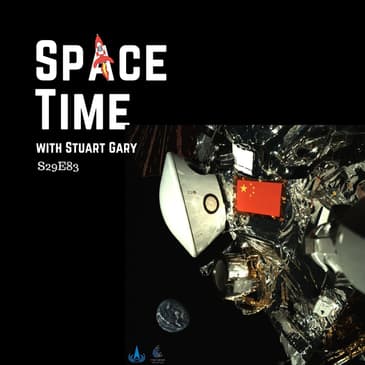
00:00:14 --> 00:00:15 spacecraft has reached Earth's, uh, second
00:00:16 --> 00:00:18 moon and seafloor spreading seen
00:00:18 --> 00:00:21 in action on a large scale for the first
00:00:21 --> 00:00:24 time. All that and more coming up on,
00:00:24 --> 00:00:27 uh, Space Time. Welcome
00:00:27 --> 00:00:29 to Space Time with Stuart G.
00:00:46 --> 00:00:47 Scientists have determined the most precise
00:00:47 --> 00:00:50 age yet for the oldest known impact crater on
00:00:50 --> 00:00:52 Earth, finding it to be some
00:00:52 --> 00:00:54 3 billion years old.
00:00:55 --> 00:00:57 That makes it the only recognised impact
00:00:57 --> 00:01:00 crater from the Achaean Aeon, a time when the
00:01:00 --> 00:01:01 planet's earliest continents were still
00:01:01 --> 00:01:04 forming. The findings, reported in the
00:01:04 --> 00:01:06 journal Geology, provide new insights into
00:01:06 --> 00:01:09 how meteor strikes shaped the planet during
00:01:09 --> 00:01:12 its earliest history. The study's authors
00:01:12 --> 00:01:14 were investigating rock formations at North
00:01:14 --> 00:01:17 Pole Dome, a geological feature located in
00:01:17 --> 00:01:19 the Pilbara craton, um, some 1 kilometres
00:01:19 --> 00:01:21 north of Perth in the Western Australian
00:01:21 --> 00:01:24 Outback. The structure covers an area of
00:01:24 --> 00:01:27 around 30 by 40 kilometres and features a
00:01:27 --> 00:01:30 raised central dome about 16 kilometres in
00:01:30 --> 00:01:33 diameter. Some initial estimates suggest the
00:01:33 --> 00:01:35 broader original crater would have spanned up
00:01:35 --> 00:01:38 to 100 kilometres wide. The
00:01:38 --> 00:01:39 study's lead author, Chris Kirkland from
00:01:39 --> 00:01:42 Curtin University, says the findings helped
00:01:42 --> 00:01:44 resolve a long standing question about the
00:01:44 --> 00:01:47 timing of the impact. Kirkland says while the
00:01:47 --> 00:01:49 site had previously been identified as an
00:01:49 --> 00:01:52 ancient impact structure, its exact age
00:01:52 --> 00:01:55 remained uncertain. But the impact left
00:01:55 --> 00:01:57 behind chemical clocks dating the minerals
00:01:57 --> 00:01:59 that were remade or newly grown in the
00:01:59 --> 00:02:02 damaged rocks. Key evidence came from
00:02:02 --> 00:02:05 zircons, tiny but extraordinarily resilient
00:02:05 --> 00:02:07 minerals that can keep geological time for
00:02:07 --> 00:02:10 billions of years. Some of the zircons at
00:02:10 --> 00:02:13 North Pole Dome have unusual branching
00:02:13 --> 00:02:15 skeletal shapes. Herculans interpreted
00:02:15 --> 00:02:18 these as impact modified crystals formed
00:02:18 --> 00:02:20 when older zircons, uh, were disrupted,
00:02:20 --> 00:02:23 partly recrystallized and in places
00:02:23 --> 00:02:26 regrown during intense heating caused by the
00:02:26 --> 00:02:29 impact. These zircon uh crystals record
00:02:29 --> 00:02:31 an event around 3 billion
00:02:31 --> 00:02:34 years ago, which the authors believe is the
00:02:34 --> 00:02:37 best time estimate for the impact. To confirm
00:02:37 --> 00:02:39 the results, Kirkland and colleagues analysed
00:02:39 --> 00:02:41 a second mineral apatite, which formed as hot
00:02:41 --> 00:02:44 fluids moved through shock damaged rocks.
00:02:44 --> 00:02:47 And this independent dating method produced
00:02:47 --> 00:02:49 the same result. The agreement between
00:02:49 --> 00:02:52 two different mineral dating systems provides
00:02:52 --> 00:02:54 strong evidence of a signature for a single
00:02:54 --> 00:02:57 major event an asteroid meteor impact.
00:02:58 --> 00:03:00 Ancient impact craters are incredibly
00:03:00 --> 00:03:02 difficult to date. That's because over
00:03:02 --> 00:03:04 billions of years, things like plate
00:03:04 --> 00:03:07 tectonics and water and wind erosion erases
00:03:07 --> 00:03:10 impact structures. And rocks can be altered
00:03:10 --> 00:03:12 by Heat, pressure and fluids which can
00:03:12 --> 00:03:15 obscure or reset the original impact signals.
00:03:16 --> 00:03:18 Kirkland says this discovery pushes Earth's
00:03:18 --> 00:03:21 impact record much deeper into geological
00:03:21 --> 00:03:23 time than any previously well dated crater,
00:03:23 --> 00:03:25 offering a rare glimpse into the violent
00:03:25 --> 00:03:27 processes that shaped the early Earth.
00:03:27 --> 00:03:30 Professor Chris Kirkland : We find these shatter cones, the rocks in the
00:03:30 --> 00:03:32 Pilbara. So shatter cones are these special
00:03:32 --> 00:03:34 features within rocks that are the real
00:03:34 --> 00:03:37 smoking gun for an impact. So these are like
00:03:37 --> 00:03:39 upside down conical features within the
00:03:39 --> 00:03:41 rocks. But there was a bit of an outstanding
00:03:41 --> 00:03:44 question which was over the age of the
00:03:44 --> 00:03:46 rocks and the, indeed the impact event that
00:03:46 --> 00:03:49 caused these shatter cones. So, um, we
00:03:49 --> 00:03:51 managed to find some very delicate little
00:03:51 --> 00:03:53 features within the rocks themselves that
00:03:53 --> 00:03:55 created a new mineral. And that new mineral
00:03:55 --> 00:03:58 tells us about the intense heat of the impact
00:03:58 --> 00:04:01 and that dates it to a staggering 3 billion
00:04:01 --> 00:04:03 years old. So it's now the oldest impact
00:04:03 --> 00:04:04 crater on the planet.
00:04:04 --> 00:04:06 Stuart Gary: Now, this evidence, these minerals were
00:04:06 --> 00:04:08 zircons. What is it about zircons that makes
00:04:08 --> 00:04:10 them so unique as geological timekeepers?
00:04:10 --> 00:04:13 Professor Chris Kirkland : Yeah, the preeminent geological timekeeper,
00:04:13 --> 00:04:15 really. Geologist's best friend. It's really
00:04:15 --> 00:04:17 because they form quite readily, but once
00:04:17 --> 00:04:19 they're formed, they stay in the rock record.
00:04:19 --> 00:04:22 So they form because they contain a little
00:04:22 --> 00:04:24 bit of zirconium, but they also, when they
00:04:24 --> 00:04:26 grow, incorporate a little bit of uranium.
00:04:26 --> 00:04:28 And over time that uranium changes to lead.
00:04:28 --> 00:04:30 So it gives us this inbuilt stopwatch. Now,
00:04:30 --> 00:04:32 the neat thing about zircon is it while it's
00:04:32 --> 00:04:34 in the rock, it can change and
00:04:34 --> 00:04:37 recrystallize because of other processes, but
00:04:37 --> 00:04:40 it requires quite an extreme process to do
00:04:40 --> 00:04:43 that. So the zircons that
00:04:43 --> 00:04:45 were sitting about quite happily three and a
00:04:45 --> 00:04:46 half billion years ago, which is the age of
00:04:46 --> 00:04:49 the original rock that was there, got whacked
00:04:49 --> 00:04:51 by a huge impact event. And that impact event
00:04:51 --> 00:04:53 brought with a lot of energy and heat. And
00:04:53 --> 00:04:56 that heat recrystallized those zircon grains
00:04:56 --> 00:04:57 and it changed them into these beautiful
00:04:57 --> 00:04:59 forms that look like little lightning bolt
00:04:59 --> 00:05:01 within the rock. And those little zircons
00:05:01 --> 00:05:03 that are now lightning bolts give us the 3
00:05:03 --> 00:05:05 billion year old age. So it's a bit of
00:05:05 --> 00:05:07 detective work to piece that all together,
00:05:07 --> 00:05:09 but it gives us this really detailed history
00:05:09 --> 00:05:11 of the process that went on there.
00:05:11 --> 00:05:13 Stuart Gary: And how do you go about actually dating a
00:05:13 --> 00:05:14 zircon crystal? What's the process?
00:05:14 --> 00:05:17 Professor Chris Kirkland : Yeah, so it's a bit of laborious, pinstaking
00:05:17 --> 00:05:18 work, but what you do is you take, in this
00:05:18 --> 00:05:21 case, we took a slice of the rock, literally
00:05:21 --> 00:05:24 a little wafer of the rock. We cut it with a
00:05:24 --> 00:05:26 Rock saw with a diamond blade. And then we
00:05:26 --> 00:05:28 were able to use a range of different
00:05:28 --> 00:05:30 microscopic tools, literally everything from
00:05:30 --> 00:05:32 a light microscope to scanning electron
00:05:32 --> 00:05:35 microscope, to really go in and hunt in
00:05:35 --> 00:05:37 detail for these little zircon crystals. So
00:05:37 --> 00:05:39 the crystals themselves are really small.
00:05:39 --> 00:05:42 They're about 20 microns across. So you could
00:05:42 --> 00:05:44 fit quite a lot of them on top of a human
00:05:44 --> 00:05:46 hair, they're that small. And then what we
00:05:46 --> 00:05:48 did is we took those slices of rock and put
00:05:48 --> 00:05:51 them inside an instrument, an Australian
00:05:51 --> 00:05:52 built instrument, actually, it's called the
00:05:52 --> 00:05:55 shrimp, which stands for the sensitive high
00:05:55 --> 00:05:57 resolution ion microprobe. And that allows us
00:05:57 --> 00:06:00 to fire ion beams at the sample
00:06:00 --> 00:06:03 surface. So we targeted the zircon and
00:06:03 --> 00:06:06 we fired a beam of oxygen ions into that.
00:06:06 --> 00:06:08 Those ions, uh, ablated the surface or
00:06:08 --> 00:06:11 blasted the surface. And from that we were
00:06:11 --> 00:06:14 able to effectively count, using a
00:06:14 --> 00:06:16 glorified amplifier, the amount of uranium
00:06:16 --> 00:06:18 and lead ions that were coming off the
00:06:18 --> 00:06:21 surface. And because the ratio of uranium to
00:06:21 --> 00:06:23 lead is a clock, we were able to use that to
00:06:23 --> 00:06:25 calculate the age of the crystals. So it's
00:06:25 --> 00:06:28 really important that we use that beam based
00:06:28 --> 00:06:30 technique to fire beams into the crystals
00:06:30 --> 00:06:32 because we could find older crystals that
00:06:32 --> 00:06:35 were 3.5 billion years old that told us about
00:06:35 --> 00:06:38 the original edge of the rock that, uh, for a
00:06:38 --> 00:06:40 geologist is called the target rock. So we
00:06:40 --> 00:06:41 could work out the target rock edge, but we
00:06:41 --> 00:06:44 could also find these lightning bolts, like
00:06:44 --> 00:06:46 skeletal crystals, little skeletons of
00:06:46 --> 00:06:48 crystals, and they were the ones that are 3
00:06:48 --> 00:06:50 billion years old that help us understand the
00:06:50 --> 00:06:51 age of the impact event.
00:06:51 --> 00:06:53 Stuart Gary: And as well as the zircon, you're also able
00:06:53 --> 00:06:56 to find a second mineral which helped confirm
00:06:56 --> 00:06:56 the results.
00:06:56 --> 00:06:58 Professor Chris Kirkland : Yeah, that's right. So we were also able to
00:06:58 --> 00:07:01 find apatite. So apatite is a calcium
00:07:01 --> 00:07:03 phosphate mineral and it responds a little
00:07:03 --> 00:07:06 bit differently to zircon. So it also
00:07:06 --> 00:07:08 grows with a little bit of uranium. So
00:07:08 --> 00:07:10 because it's got a little bit uranium, we can
00:07:10 --> 00:07:12 look at the uranium lead ratio and that gives
00:07:12 --> 00:07:14 us an age for it. But if we look at the
00:07:14 --> 00:07:15 chemistry of the appetite, it's interesting.
00:07:15 --> 00:07:18 It's enriched in its kind of mid rare
00:07:18 --> 00:07:20 earth elements. And that's a very
00:07:20 --> 00:07:22 characteristic fingerprint for growth from
00:07:22 --> 00:07:24 hot water. So that's really interesting. So
00:07:24 --> 00:07:27 now we've got evidence for an event that
00:07:27 --> 00:07:29 brought an awful lot of heat at 3 billion
00:07:29 --> 00:07:31 years ago, and then an event roughly at about
00:07:31 --> 00:07:34 3 billion years ago that also involved a lot
00:07:34 --> 00:07:36 of hot water circulating and those two things
00:07:36 --> 00:07:38 put together in a rock that has shatter
00:07:38 --> 00:07:41 cones, a rock that's been Subject to
00:07:41 --> 00:07:44 impact shock tells us about an event
00:07:44 --> 00:07:46 that is the impact event itself at 3 billion
00:07:46 --> 00:07:47 years ago.
00:07:47 --> 00:07:49 Stuart Gary: Now, uh, usually when you're at a impact site
00:07:49 --> 00:07:51 and you fossil around, you can usually find
00:07:51 --> 00:07:54 little dark glassy balls on the surface.
00:07:54 --> 00:07:56 Spheres on the surface. Were they around or
00:07:56 --> 00:07:58 is this simply too old for those sort of
00:07:58 --> 00:07:59 things to still be there?
00:07:59 --> 00:08:01 Professor Chris Kirkland : Oh, uh, that's a lovely question because it
00:08:01 --> 00:08:03 actually gives us uh, an awful lot more
00:08:03 --> 00:08:05 information. So what you're talking about are
00:08:05 --> 00:08:07 called spherules and they're, when an impact
00:08:07 --> 00:08:10 hits, they will throw up uh, uh, material
00:08:10 --> 00:08:12 from the surface and it will rain down as
00:08:12 --> 00:08:15 glassy little balls. You can imagine all the
00:08:15 --> 00:08:17 energy that came into the planet. Now what's
00:08:17 --> 00:08:19 really interesting about this site in North
00:08:19 --> 00:08:21 Pole, probably about a decade ago in the
00:08:21 --> 00:08:23 Tilburg, there was actually in the same part
00:08:23 --> 00:08:25 of the stratigraphy where we managed to find
00:08:25 --> 00:08:27 the shatter cones, there was evidence found
00:08:27 --> 00:08:29 of these glassy black
00:08:29 --> 00:08:32 balls, these spherules. And um, that was
00:08:32 --> 00:08:34 taken as evidence of an ancient impact. So
00:08:34 --> 00:08:37 the reason this is really interesting is the
00:08:37 --> 00:08:39 rock that contains the shatter cones also
00:08:39 --> 00:08:42 contains these little glass balls, these
00:08:42 --> 00:08:44 spherules. So it actually has to tell us
00:08:44 --> 00:08:46 about an even older impact event. So this
00:08:46 --> 00:08:49 rock that contains the North Pole crater,
00:08:49 --> 00:08:52 that formed the shatter cones even earlier in
00:08:52 --> 00:08:54 its history must have been hit and
00:08:54 --> 00:08:57 incorporated these little glass balls and
00:08:57 --> 00:09:00 that pieces together to tell us about the
00:09:00 --> 00:09:02 early Earth and the impact history on the
00:09:02 --> 00:09:04 early Earth. So you know, we can go out and
00:09:04 --> 00:09:06 look at the Moon on a cloudless night. The
00:09:06 --> 00:09:08 first thing we see is the impact craters on
00:09:08 --> 00:09:11 it. But Earth has remarkably few impact
00:09:11 --> 00:09:13 craters. So the nice thing that we're able to
00:09:13 --> 00:09:16 now start to piece together is that the
00:09:16 --> 00:09:18 earlier Earth matched. Probably it was like
00:09:18 --> 00:09:21 the Moon record. It was getting pummelling by
00:09:21 --> 00:09:23 impact craters. And it's just that on Earth
00:09:23 --> 00:09:25 we've got erosion and plate tectonics that
00:09:25 --> 00:09:26 ah, remove all that evidence.
00:09:26 --> 00:09:28 Stuart Gary: And what is it about the North Pole Dome
00:09:28 --> 00:09:31 region that allowed the, the usual erosion
00:09:31 --> 00:09:33 of this evidence to be halted somewhat?
00:09:33 --> 00:09:35 Professor Chris Kirkland : Yeah, that's right. It's just a really
00:09:35 --> 00:09:37 special place. But it's a really special
00:09:37 --> 00:09:39 place because of its age and also because it
00:09:39 --> 00:09:42 hasn't been cooked up and metamorphosed. So
00:09:42 --> 00:09:44 it's one of these really special places that
00:09:44 --> 00:09:45 uh, is just being preserved.
00:09:45 --> 00:09:48 It's not really at high metamorphic grade. So
00:09:48 --> 00:09:50 in other words, it's not been subducted, it's
00:09:50 --> 00:09:53 not being heavily taken to depth.
00:09:53 --> 00:09:56 So it's pretty much always been floating
00:09:56 --> 00:09:58 around as this really Old piece of Earth's
00:09:58 --> 00:10:00 surface. So there are other bits like this in
00:10:00 --> 00:10:03 Canada and other places in Western Australia,
00:10:03 --> 00:10:05 but they're very few and far between. So it's
00:10:05 --> 00:10:07 really this deep time archive of our planet
00:10:07 --> 00:10:08 and it's why it's so special.
00:10:08 --> 00:10:11 Stuart Gary: Okay, you've worked out a date, you pretty
00:10:11 --> 00:10:13 well know what it was. What happens next?
00:10:13 --> 00:10:15 Where does one go to now? Are you going to
00:10:15 --> 00:10:17 try and work out what type of meteorite it
00:10:17 --> 00:10:20 was? Are you going to try and work out what
00:10:20 --> 00:10:21 direction it came from? Is that even
00:10:21 --> 00:10:23 possible? Where to next?
00:10:23 --> 00:10:25 Professor Chris Kirkland : Yeah, so I think, you know, because it's such
00:10:25 --> 00:10:28 an old impact site, it probably several
00:10:28 --> 00:10:31 kilometres underground and that we've
00:10:31 --> 00:10:33 stripped off quite a bit of the surface above
00:10:33 --> 00:10:35 it. So it doesn't look like a crater. You
00:10:35 --> 00:10:37 know, the land surface today there is, um,
00:10:37 --> 00:10:39 what was a beautiful bit of the outback. It's
00:10:39 --> 00:10:40 not an obvious crater unless you're a
00:10:40 --> 00:10:42 geologist walking over the ground and seeing
00:10:42 --> 00:10:44 the shatter cones. But I think one of the
00:10:44 --> 00:10:46 really interesting things about this site is
00:10:46 --> 00:10:49 it gives us an opportunity to understand what
00:10:49 --> 00:10:51 other processes, other chemical reactions,
00:10:51 --> 00:10:53 happened in the crust at the same time as an
00:10:53 --> 00:10:55 impact came in. So we can see all these veins
00:10:55 --> 00:10:58 and all these other geologists would call
00:10:58 --> 00:11:00 hydrothermal processes. So processes related
00:11:00 --> 00:11:03 to hot water penetrating through the rocks
00:11:03 --> 00:11:04 and modifying the rocks and creating all
00:11:04 --> 00:11:06 these different chemical reactions. So I
00:11:06 --> 00:11:07 think that's really important to understand
00:11:08 --> 00:11:10 those, uh, reactions and how they
00:11:10 --> 00:11:12 developed within the rocks, because those are
00:11:12 --> 00:11:14 the sorts of reactions that, uh, might have
00:11:14 --> 00:11:16 been important for other things happening at
00:11:16 --> 00:11:18 around that time, including potentially
00:11:18 --> 00:11:20 modifying what early life we had on the
00:11:20 --> 00:11:20 planet.
00:11:20 --> 00:11:22 Stuart Gary: Yeah, that's another thing often found at
00:11:22 --> 00:11:24 impact site. The chemical processes that are
00:11:24 --> 00:11:26 going on, they act to encourage the
00:11:26 --> 00:11:27 development of life in those areas.
00:11:27 --> 00:11:29 Professor Chris Kirkland : Yeah, exactly right. So I think, you know,
00:11:30 --> 00:11:32 they essentially act like catalysts to help
00:11:32 --> 00:11:35 kickstart prebiotic chemical reactions. So,
00:11:35 --> 00:11:38 um, you're right, you know, a big impactor is
00:11:38 --> 00:11:40 bringing in huge amounts of energy. So that
00:11:40 --> 00:11:43 energy will create heat. Heat starts
00:11:43 --> 00:11:46 to percolate and move fluids about and, um,
00:11:46 --> 00:11:47 kickstart chemical reactions. So you're
00:11:47 --> 00:11:49 really looking at, you know, starting a
00:11:49 --> 00:11:51 cauldron and bubbling, bubbling things away.
00:11:51 --> 00:11:53 And that's where you start to think about the
00:11:53 --> 00:11:56 development of, of prebiotic chemistry. And
00:11:56 --> 00:11:58 that might even lead to. What's interesting
00:11:58 --> 00:12:01 in the North Pole area is, we know, in the
00:12:01 --> 00:12:04 rock mass there, even older in the rock mass.
00:12:04 --> 00:12:06 So before 3 billion, uh, years, so before
00:12:06 --> 00:12:09 this impact happened, we know from
00:12:09 --> 00:12:11 stromatolites that there was already some
00:12:11 --> 00:12:13 form of early fossilised life there.
00:12:13 --> 00:12:15 So I think what we're getting is a better
00:12:15 --> 00:12:18 picture on our ancient planet. Our ancient
00:12:18 --> 00:12:20 planet was hit by not just one meteorite but
00:12:20 --> 00:12:22 lots of meteorites. And those meteorites
00:12:22 --> 00:12:24 might have been important for early chemical
00:12:24 --> 00:12:25 reactions and potentially those are the exact
00:12:25 --> 00:12:28 sorts of places that might have been the um,
00:12:28 --> 00:12:31 cauldrons for early um, early life
00:12:31 --> 00:12:32 processes. So quite exciting.
00:12:33 --> 00:12:36 Stuart Gary: What was that area, what was the North Pole
00:12:36 --> 00:12:38 dome structure like 3 billion years ago?
00:12:38 --> 00:12:40 Professor Chris Kirkland : It would have been a day, 3 billion years ago
00:12:40 --> 00:12:43 when it got hit. But um, we know that um, our
00:12:43 --> 00:12:45 early planet was a ah, water world. So there
00:12:45 --> 00:12:48 would have been a probably near global ocean
00:12:48 --> 00:12:50 with probably only little small bits of
00:12:50 --> 00:12:52 continental crust sticking up above that
00:12:52 --> 00:12:54 ocean. And the evidence for that is really
00:12:54 --> 00:12:56 quite easy to see in the rocks there. They're
00:12:56 --> 00:12:59 basalt flows, so dark coloured rocks but
00:12:59 --> 00:13:01 they've got these beautiful ships that are
00:13:01 --> 00:13:03 very pristinely preserved within them that
00:13:03 --> 00:13:06 are called pillow basalts. So they've got
00:13:06 --> 00:13:08 pillow like ships. And we can see the same
00:13:08 --> 00:13:10 sort of thing happening today on Hawaii where
00:13:10 --> 00:13:13 you have uh, a basaltic magma erupting
00:13:13 --> 00:13:15 underwater and it forms these beautiful
00:13:15 --> 00:13:17 structures. So we know, we know that it was a
00:13:17 --> 00:13:19 wet planet where the meteorite hit and it
00:13:19 --> 00:13:21 struck that and would have vaporised a lot of
00:13:21 --> 00:13:24 water. That water would have condensed in the
00:13:24 --> 00:13:26 atmosphere, changing atmospheric composition
00:13:26 --> 00:13:27 but it would also have chucked up huge
00:13:27 --> 00:13:30 amounts of rock dust and uh, as well. So
00:13:30 --> 00:13:32 there have been a bit of a nuclear winter
00:13:32 --> 00:13:34 situation after that. But uh, longer, longer
00:13:34 --> 00:13:37 term processes I think uh, are interesting to
00:13:37 --> 00:13:38 think about and that's when we think about
00:13:38 --> 00:13:40 these long term chemical reactions that would
00:13:40 --> 00:13:42 have been kickstarted in the rock mass
00:13:42 --> 00:13:44 because of the immense uh, energy brought
00:13:44 --> 00:13:44 into the planet.
00:13:44 --> 00:13:46 Stuart Gary: You talk about immense energy that can come
00:13:46 --> 00:13:49 from both speed and mass. Do you have any
00:13:49 --> 00:13:51 idea how big the impact was?
00:13:51 --> 00:13:52 Professor Chris Kirkland : Yeah, that's a, that's a great question.
00:13:52 --> 00:13:54 That's actually quite challenging to get at.
00:13:54 --> 00:13:56 So I think that is one area that would be
00:13:56 --> 00:13:58 really interesting and important to look at.
00:13:58 --> 00:14:01 So to do those sorts of calculations, what
00:14:01 --> 00:14:04 you need to kind of do from the geological
00:14:04 --> 00:14:07 side is look at the extent of the uh, impact
00:14:07 --> 00:14:10 damage rocks, give you an idea of the size of
00:14:10 --> 00:14:12 the impactor that's still work ongoing.
00:14:12 --> 00:14:14 Another interesting point is that we also
00:14:14 --> 00:14:17 don't really have any clue what the impactor
00:14:17 --> 00:14:19 was. So that meteorite coming in, we don't
00:14:19 --> 00:14:21 really know anything about it. It was
00:14:21 --> 00:14:23 completely obviously vaporised. So trying to
00:14:23 --> 00:14:26 track down the chemistry of that is really
00:14:26 --> 00:14:27 challenging because there might be
00:14:27 --> 00:14:28 Essentially nothing of it left.
00:14:29 --> 00:14:31 Stuart Gary: That's Professor Chris Kirkland from Curtin
00:14:31 --> 00:14:34 University. And this is space time
00:14:35 --> 00:14:38 still to come. A Chinese spacecraft has
00:14:38 --> 00:14:40 just arrived at Earth's, uh, second moon and
00:14:40 --> 00:14:43 the process of sea floor spreading seen in
00:14:43 --> 00:14:46 great detail for the first time. All that and
00:14:46 --> 00:14:48 more still to come on, um, space time.
00:15:02 --> 00:15:05 China's Tien Wentu spacecraft has arrived at
00:15:05 --> 00:15:08 a temporary second moon orbiting the Earth.
00:15:08 --> 00:15:10 Although technically this object is actually
00:15:10 --> 00:15:12 a small near Earth asteroid which is orbiting
00:15:12 --> 00:15:15 in sync with the Earth around the sun, called
00:15:15 --> 00:15:18 469219 Kammaawila, which means
00:15:18 --> 00:15:20 oscillating celestial object in Hawaiian. It
00:15:20 --> 00:15:23 also goes by the name of 2016 HO3
00:15:24 --> 00:15:26 and it's one of seven so called quasi
00:15:26 --> 00:15:28 satellites which share Earth's, uh, orbital
00:15:28 --> 00:15:31 neighbourhood. Discovered in 2016, the
00:15:31 --> 00:15:34 asteroid is between 40 and 100 metres wide,
00:15:34 --> 00:15:36 making it the smallest asteroid ever visited.
00:15:37 --> 00:15:39 Many scientists think it could be a missing
00:15:39 --> 00:15:41 piece of the moon, blasted off during a major
00:15:41 --> 00:15:44 asteroid impact long ago. However,
00:15:44 --> 00:15:47 more recent analyses suggest it may simply be
00:15:47 --> 00:15:49 a common type of stony asteroid known as an
00:15:49 --> 00:15:52 ll Chondrite, whose surface has been severely
00:15:52 --> 00:15:54 weathered by the harsh space environment.
00:15:55 --> 00:15:57 Long term orbital analyses suggest that
00:15:57 --> 00:16:00 Kamaawela entered its current quasi satellite
00:16:00 --> 00:16:03 orbit around 100 years ago. The
00:16:03 --> 00:16:05 Chinese mission will spend the next nine
00:16:05 --> 00:16:07 months orbiting this intriguing asteroid,
00:16:07 --> 00:16:09 studying and mapping its surface features,
00:16:09 --> 00:16:12 the asteroid's motion through space, the way
00:16:12 --> 00:16:14 it rotates and spins and its composition.
00:16:15 --> 00:16:17 Tianwen 2 will also be looking for a place to
00:16:17 --> 00:16:20 touch down and collect around 100 grammes of
00:16:20 --> 00:16:22 regolith for sample return to Earth. Uh, the
00:16:22 --> 00:16:25 Tienwen 2 mission launched from the Zhaichang
00:16:25 --> 00:16:27 Satellite Launch Centre back in May last
00:16:27 --> 00:16:29 year. The name Tienwen means
00:16:29 --> 00:16:32 heavenly questions in Mandarin. The
00:16:32 --> 00:16:34 Tienwen 2 mission carries both a touch and go
00:16:34 --> 00:16:37 sampling system and an anchor and attach
00:16:37 --> 00:16:39 mechanism equipped with drills for collecting
00:16:39 --> 00:16:42 surface material. It will depart the asteroid
00:16:42 --> 00:16:45 next April before releasing a return capsule
00:16:45 --> 00:16:47 that should land back on Earth in November
00:16:47 --> 00:16:50 2027. Following its visit
00:16:50 --> 00:16:52 to Kamauliwa, Tian N2 will use a gravity
00:16:52 --> 00:16:54 assist manoeuvre to slingshot itself to the
00:16:54 --> 00:16:57 Comet 311P Pan stars arriving there
00:16:57 --> 00:16:59 in January 2035.
00:17:00 --> 00:17:03 Tianwen 2's predecessor, Tianwen 1, is a
00:17:03 --> 00:17:06 Mars Orbiter lander and rover mission that
00:17:06 --> 00:17:08 successfully touched down on the Red planet
00:17:08 --> 00:17:10 back in May 2021, releasing its Huron
00:17:10 --> 00:17:13 rover to study the planet's surface. The next
00:17:13 --> 00:17:16 mission, Tianwen 3 is slated for launch in
00:17:16 --> 00:17:18 2028 and right now it looks like becoming the
00:17:18 --> 00:17:21 first ever sample return mission to Mars.
00:17:21 --> 00:17:23 Bringing back Red planet regolith to uh,
00:17:23 --> 00:17:25 Earth in 2031. Meanwhile,
00:17:25 --> 00:17:28 Tianwen 4 will launch in 2030 as a pair
00:17:28 --> 00:17:31 of spacecraft with one bound for Jupiter
00:17:31 --> 00:17:32 where it will orbit the moon Callisto, and
00:17:32 --> 00:17:35 the other heading for a flyby of the planet
00:17:35 --> 00:17:38 Uranus. Needless to say, we'll
00:17:38 --> 00:17:40 keep you informed. This is space time
00:17:41 --> 00:17:44 still to come. Seafloor spreading seen
00:17:44 --> 00:17:46 in detail for the first time. And later in
00:17:46 --> 00:17:49 the Science report, development of a new
00:17:49 --> 00:17:51 vaccine which has the potential to protect
00:17:51 --> 00:17:54 people from developing aids. All that and
00:17:54 --> 00:17:56 more still to come on um, space time.
00:18:06 --> 00:18:08 Scientists studying a seafloor site southwest
00:18:08 --> 00:18:10 of Australia have for the first time actually
00:18:10 --> 00:18:13 captured how molten rock emerges at
00:18:13 --> 00:18:15 boundaries between the Earth's tectonic
00:18:15 --> 00:18:18 plates. A report in the journal Nature
00:18:18 --> 00:18:20 claims researchers set up instruments
00:18:20 --> 00:18:22 monitoring seismic activity in seafloor
00:18:22 --> 00:18:25 changes around 2 kilometres underwater along
00:18:25 --> 00:18:28 a 2.5 kilometre long stretch of the Southeast
00:18:28 --> 00:18:30 Indian Ridge, which is the boundary between
00:18:30 --> 00:18:32 the Australian and Antarctic plates.
00:18:33 --> 00:18:35 The mid ocean ridges are uh, submarine
00:18:35 --> 00:18:37 networks of tectonic boundaries. A new
00:18:37 --> 00:18:40 oceanic crust is formed from cooling magma
00:18:40 --> 00:18:42 and added to the seafloor. While
00:18:42 --> 00:18:44 2/3 of the Earth's, uh, surface has been
00:18:44 --> 00:18:46 created by these ridges, little is actually
00:18:46 --> 00:18:48 known about how they behave during discrete
00:18:48 --> 00:18:51 spreading events. Two months into their
00:18:51 --> 00:18:53 study, the authors measured earthquake
00:18:53 --> 00:18:55 activity and the ocean floor sinking by about
00:18:55 --> 00:18:58 4.2 metres as millions of cubic metres
00:18:58 --> 00:19:00 of magma that had been stored underneath
00:19:00 --> 00:19:02 poured out to form new seafloor.
00:19:03 --> 00:19:06 They suggest this deformation was due to the
00:19:06 --> 00:19:08 deflation of a 2.5 kilometre wide magma
00:19:08 --> 00:19:11 reservoir located some 3.6 kilometres
00:19:11 --> 00:19:14 below the crust. The event released
00:19:14 --> 00:19:17 upwards of 160 million cubic metres of
00:19:17 --> 00:19:20 lava onto the seafloor. The seafloor
00:19:20 --> 00:19:22 movement peaked directly after the earthquake
00:19:22 --> 00:19:24 event at 5 centimetres per minute before
00:19:24 --> 00:19:27 slowing to 1.2 centimetres per day
00:19:27 --> 00:19:30 seven days later. The authors say there must
00:19:30 --> 00:19:32 have been decades of strain buildup at the
00:19:32 --> 00:19:34 plate boundaries until the ground and magma
00:19:34 --> 00:19:37 movement finally released it in a seafloor
00:19:37 --> 00:19:39 spreading event. This is space time.
00:20:03 --> 00:20:03 Professor Chris Kirkland : Foreign.
00:20:11 --> 00:20:13 Stuart Gary: Look at some of the other storeys making news
00:20:13 --> 00:20:15 in Science this week with the Science report.
00:20:16 --> 00:20:18 Researchers have developed a new vaccine with
00:20:18 --> 00:20:20 the potential to protect people from
00:20:20 --> 00:20:22 developing HIV aids. The
00:20:22 --> 00:20:25 findings reported in the journal Nature show
00:20:25 --> 00:20:27 that this new drug is the first to generate a
00:20:27 --> 00:20:30 high number of broadly neutralising virus
00:20:30 --> 00:20:32 fighting antibodies. The new vaccine
00:20:32 --> 00:20:35 works by intervening in a process called B
00:20:35 --> 00:20:37 cell maturation. B cells make
00:20:37 --> 00:20:40 antibodies and like many immune cells, B
00:20:40 --> 00:20:42 cells have an early naive stage before
00:20:42 --> 00:20:45 they're ready to make antibodies, they start
00:20:45 --> 00:20:47 to mature, uh, once they get the signal that
00:20:47 --> 00:20:49 a pathogen such as a virus is trying to
00:20:49 --> 00:20:52 attack. They then identify pieces of the
00:20:52 --> 00:20:54 pathogen's molecular structure and start
00:20:54 --> 00:20:56 producing antibodies that can bind to that
00:20:56 --> 00:20:59 structure and halt infection. As they
00:20:59 --> 00:21:01 mature, B cells tweak their antibody
00:21:01 --> 00:21:03 production, refining antibody structures to
00:21:03 --> 00:21:05 bind to a pathogen in just the right
00:21:05 --> 00:21:08 vulnerable places. But
00:21:08 --> 00:21:10 HIV's been hard to beat because it mutates
00:21:10 --> 00:21:13 very quickly, changes its shape when it
00:21:13 --> 00:21:15 infects human cells and is wrapped in an ever
00:21:15 --> 00:21:18 shifting cloak of sugar molecules, disguising
00:21:18 --> 00:21:20 itself from the immune system and not giving
00:21:20 --> 00:21:22 B cells the chance to develop effective
00:21:22 --> 00:21:25 antibodies. The newly developed broadly
00:21:25 --> 00:21:27 neutralising antibodies were first discovered
00:21:27 --> 00:21:29 in blood samples from a small number of
00:21:29 --> 00:21:32 people l hiv and these unique
00:21:32 --> 00:21:34 antibodies could recognise key viral
00:21:34 --> 00:21:36 structures even if the rest of the virus
00:21:36 --> 00:21:39 mutates. The human immunodeficiency
00:21:39 --> 00:21:41 virus, ah, HIV attacks the immune system,
00:21:41 --> 00:21:44 causing Acquired Immunodeficiency Syndrome,
00:21:44 --> 00:21:47 or aids. AIDS allows opportunistic
00:21:47 --> 00:21:49 diseases, normally easily combated by the
00:21:49 --> 00:21:51 body, to take hold and eventually kill the
00:21:51 --> 00:21:54 patient. The World Health Organisation says
00:21:54 --> 00:21:56 that since first being identified back in
00:21:56 --> 00:21:59 1981, AIDS has killed more than
00:21:59 --> 00:22:02 43 million people globally and has infected
00:22:02 --> 00:22:04 up to 113 million others, with
00:22:04 --> 00:22:07 1.3 million new infections recorded annually.
00:22:07 --> 00:22:10 HIV is transmitted through bodily fluids.
00:22:11 --> 00:22:13 Currently, there is no cure, although it can
00:22:13 --> 00:22:16 be controlled using a combination of complex
00:22:16 --> 00:22:17 drug cocktails.
00:22:18 --> 00:22:21 A new study warns that losing even a small
00:22:21 --> 00:22:23 amount of sleep each night could be linked to
00:22:23 --> 00:22:25 weight gain. The findings, reported in the
00:22:25 --> 00:22:27 Journal of the Annals of Internal Medicine,
00:22:27 --> 00:22:30 analysed two previous studies which included
00:22:30 --> 00:22:32 some 95 adults over the age of 20, uh, who
00:22:32 --> 00:22:35 normally got at least seven hours sleep. They
00:22:35 --> 00:22:37 found that decreasing sleep by, uh, just an
00:22:37 --> 00:22:39 hour and a half each night was linked to
00:22:39 --> 00:22:42 increases in body weight, waist circumference
00:22:42 --> 00:22:44 and heart and metabolic risks. The authors
00:22:44 --> 00:22:46 also noticed that people tend to be less
00:22:46 --> 00:22:49 active than usual when they have not had much
00:22:49 --> 00:22:51 sleep. That could also be a contributing
00:22:51 --> 00:22:52 factor to weight gain.
00:22:53 --> 00:22:56 Scientists say the algal bloom that polluted
00:22:56 --> 00:22:58 South Australian coastlines last year was the
00:22:58 --> 00:23:01 most toxic species of its kind ever studied.
00:23:01 --> 00:23:03 Findings reported in the journal Nature
00:23:03 --> 00:23:05 Ecology and Evolution followed last year's
00:23:05 --> 00:23:07 identification of the Microalga
00:23:07 --> 00:23:09 coryniacaestata as the source of the
00:23:09 --> 00:23:12 neurotoxin. The research by scientists at
00:23:12 --> 00:23:14 the University of Technology Sydney shows
00:23:14 --> 00:23:16 that Karenia cristata is an order of
00:23:16 --> 00:23:19 magnitude more toxic than the next most toxic
00:23:19 --> 00:23:21 microalgae ever studied. The devastating
00:23:22 --> 00:23:25 bloom lasted about 15 months and it
00:23:25 --> 00:23:26 still hasn't completely disappeared from
00:23:26 --> 00:23:29 South Australian waters. It's been
00:23:29 --> 00:23:30 responsible for the death of millions of
00:23:30 --> 00:23:32 fish, mammals, birds and marine
00:23:32 --> 00:23:33 invertebrates.
00:23:35 --> 00:23:37 China has test fired a nuclear capable
00:23:37 --> 00:23:39 missile across the Pacific Ocean just hours
00:23:39 --> 00:23:42 after Australia signed a new defence alliance
00:23:42 --> 00:23:45 with Fiji. The launch from a nuclear
00:23:45 --> 00:23:47 submarine in the South China Sea near Henan
00:23:47 --> 00:23:49 island splashed down between the Pacific
00:23:49 --> 00:23:52 islands of Tuvalu and Nauru. The test
00:23:52 --> 00:23:55 represents an escalation of Beijing's ongoing
00:23:55 --> 00:23:57 military expansion and was designed to send a
00:23:57 --> 00:23:59 clear warning to Australia, which is working
00:23:59 --> 00:24:01 to strengthen regional ties with Pacific
00:24:01 --> 00:24:03 island nations in order to counter China's
00:24:03 --> 00:24:06 efforts to expand its military presence in
00:24:06 --> 00:24:08 the region. So what do we know about the
00:24:08 --> 00:24:11 missile? Well, it was a JL3 submarine
00:24:11 --> 00:24:13 launched ballistic missile. It features a
00:24:13 --> 00:24:16 solid fuelled rocket motor and has a range of
00:24:16 --> 00:24:18 around 10 kilometres. The
00:24:18 --> 00:24:21 JL3 is MIRV capable, but usually
00:24:21 --> 00:24:24 carries a single 3 megaton thermonuclear
00:24:24 --> 00:24:26 warhead. They are launched from modified Type
00:24:26 --> 00:24:29 094 nuclear submarines which are based at
00:24:29 --> 00:24:31 Henan island in the South China Sea.
00:24:32 --> 00:24:34 Uh, now normally Beijing keeps its nuclear
00:24:34 --> 00:24:37 submarine fleet close to home, but this
00:24:37 --> 00:24:39 signals a clear escalation designed to let
00:24:39 --> 00:24:42 Western nations know that China is willing to
00:24:42 --> 00:24:44 send its nuclear submarine fleet much further
00:24:44 --> 00:24:47 afield. The Pentagon estimates China's
00:24:47 --> 00:24:49 nuclear stockpile currently includes more
00:24:49 --> 00:24:52 than 600 warheads, but says that's predicted
00:24:52 --> 00:24:54 to climb to over a thousand by 2030.
00:24:56 --> 00:24:58 What may well be Australia's most famous
00:24:58 --> 00:25:01 UFO sighting has just celebrated its 60th
00:25:01 --> 00:25:03 anniversary. The Westall High School
00:25:03 --> 00:25:06 UFO was seen by dozens of school kids and
00:25:06 --> 00:25:09 their teachers back in 1966. The
00:25:09 --> 00:25:11 sceptics, Timms Mendham, says even more
00:25:11 --> 00:25:13 intriguing than the mass sighting was how
00:25:13 --> 00:25:15 authorities tried to cover it all up.
00:25:15 --> 00:25:17 Tim Mendham: The 60th anniversary of this Westall sighting
00:25:17 --> 00:25:19 has just come around. So it got a bit of
00:25:19 --> 00:25:21 notice, the storey goes, that a young girl
00:25:21 --> 00:25:23 ran into a school at Westall, which is in
00:25:23 --> 00:25:25 southeast Melbourne, and this girl ran into
00:25:25 --> 00:25:27 the classroom saying, sir, sir, sir, there's
00:25:27 --> 00:25:29 a flying saucer outside. So all the kids went
00:25:29 --> 00:25:31 yay and all go running out. A teacher sort of
00:25:31 --> 00:25:33 went out as well. And then a lot of the kids
00:25:33 --> 00:25:35 in other classes went running out and they
00:25:35 --> 00:25:37 various numbers they reckoned of kids being
00:25:37 --> 00:25:40 out there. They saw a craft going through
00:25:40 --> 00:25:42 the sky, going a bit up and down, big speed,
00:25:42 --> 00:25:44 slow speed, supposedly landing, landing in a
00:25:44 --> 00:25:47 field nearby called the Grange. And then it
00:25:47 --> 00:25:49 took off again and some kids ran across to
00:25:49 --> 00:25:50 the Grange, you know, leaping over the
00:25:50 --> 00:25:52 fences, which they weren't supposed to do.
00:25:52 --> 00:25:54 And one of them, they came close and some of
00:25:54 --> 00:25:55 them felt they were
00:25:55 --> 00:25:56 Professor Chris Kirkland : even burned by it.
00:25:56 --> 00:25:58 Tim Mendham: Pretty soon after, police Turned up and
00:25:58 --> 00:26:00 military people turned up and we're talking
00:26:00 --> 00:26:02 to the kids and taking them aside saying, you
00:26:02 --> 00:26:04 know, you didn't see anything, you got to
00:26:04 --> 00:26:06 forget what you saw, don't tell anybody,
00:26:06 --> 00:26:08 blah, blah, blah. Supposedly said the same
00:26:08 --> 00:26:10 things to some of the teachers. And then the
00:26:10 --> 00:26:12 principal of the school said, do not talk
00:26:12 --> 00:26:14 about this to anybody. Don't talk to the
00:26:14 --> 00:26:16 press, don't talk to anyone neither. Some
00:26:16 --> 00:26:17 kids talk to the press and the press were
00:26:17 --> 00:26:20 there some photos that one of the teachers
00:26:20 --> 00:26:22 took disappeared mysteriously. A news
00:26:23 --> 00:26:25 storey or news film that was taken by a local
00:26:25 --> 00:26:27 TV station disappeared when they tried to
00:26:27 --> 00:26:29 find it years later. The kids gather every so
00:26:29 --> 00:26:32 often, every few years for a reunion and they
00:26:32 --> 00:26:34 all sort of discuss what they saw. Now,
00:26:34 --> 00:26:36 interesting, the drawings that people did of
00:26:36 --> 00:26:38 this thing vary.
00:26:38 --> 00:26:38 Professor Chris Kirkland : Okay.
00:26:38 --> 00:26:40 Tim Mendham: Some of them are quite round, some of them
00:26:40 --> 00:26:42 are saucer shaped, some of them have windows,
00:26:42 --> 00:26:43 some of them don't. One person even said they
00:26:43 --> 00:26:45 saw three, but most of them say they only saw
00:26:45 --> 00:26:48 one. What happens is that the suggestions
00:26:48 --> 00:26:50 were one, it's a ufo. Uh, that was very
00:26:50 --> 00:26:52 exciting, but they don't have a lot of
00:26:52 --> 00:26:53 evidence for that.
00:26:53 --> 00:26:55 Stuart Gary: The other thing is, is a UFO because it's
00:26:55 --> 00:26:55 unidentified?
00:26:55 --> 00:26:58 Tim Mendham: Well, yes, it is. Not. Not how we normally
00:26:58 --> 00:26:59 interpret the word. Right. Not a flying
00:26:59 --> 00:27:00 saucer.
00:27:00 --> 00:27:00 Professor Chris Kirkland : Right.
00:27:00 --> 00:27:02 Tim Mendham: The other thing was that is balloons, either
00:27:02 --> 00:27:05 a weather balloon or a specific balloon that
00:27:05 --> 00:27:07 was sort of sent up to do radiation testing.
00:27:07 --> 00:27:09 Don't forget that in those days there were
00:27:09 --> 00:27:10 radiation tests in Australia.
00:27:10 --> 00:27:13 Stuart Gary: This is the highball, high altitude balloon
00:27:13 --> 00:27:13 process.
00:27:13 --> 00:27:15 Tim Mendham: Yeah. And there was a weather balloon
00:27:15 --> 00:27:17 certainly sent up about the same time that
00:27:17 --> 00:27:19 morning from a place called Laverton, which
00:27:19 --> 00:27:21 is in the southwest of Melbourne, across the
00:27:21 --> 00:27:23 other side of the big bay that Melbourne is
00:27:23 --> 00:27:24 situated around. And it would have flown
00:27:24 --> 00:27:26 across to about Westall because the winds
00:27:26 --> 00:27:28 were coming from the westerly direction or
00:27:28 --> 00:27:30 southwesterly. And it would have been quite
00:27:30 --> 00:27:32 appropriate and quite reasonable to expect
00:27:32 --> 00:27:34 that it would blow over that way. Variable
00:27:34 --> 00:27:36 winds, gusty winds, it would go
00:27:36 --> 00:27:37 Professor Chris Kirkland : up and down, all sorts of things.
00:27:37 --> 00:27:40 Tim Mendham: The highball testing is even, possibly even
00:27:40 --> 00:27:42 more, ah, possible, although we don't have a
00:27:42 --> 00:27:44 lot of details of the actual launches of
00:27:44 --> 00:27:44 such.
00:27:44 --> 00:27:47 Stuart Gary: Uh, I believe, by the way, that's, that's
00:27:47 --> 00:27:48 what I think it was.
00:27:48 --> 00:27:48 Professor Chris Kirkland : Uh-huh.
00:27:48 --> 00:27:50 Tim Mendham: Yes. I tend to believe that too, actually,
00:27:50 --> 00:27:52 because it is more active and certainly can
00:27:52 --> 00:27:55 zip up at a rapid rate when the wind catches.
00:27:55 --> 00:27:56 Stuart Gary: And it would explain why the military got
00:27:56 --> 00:27:57 involved.
00:27:57 --> 00:27:58 Tim Mendham: Absolutely, yeah. There are also suggestions
00:27:58 --> 00:28:00 at times that there was small planes buzzing
00:28:00 --> 00:28:02 the UFO flying saucer that's what the kids
00:28:02 --> 00:28:04 report. They saw planes, five planes. It's
00:28:04 --> 00:28:05 right near an airport, so there'd be a
00:28:05 --> 00:28:07 plane's and down at the time. And if
00:28:07 --> 00:28:08 something said they saw something there, I'd
00:28:08 --> 00:28:10 be buzzing around it too. Finding records of
00:28:10 --> 00:28:12 this thing is difficult. That's one of the
00:28:12 --> 00:28:13 problem things. Yeah. The records are a bit
00:28:13 --> 00:28:15 incomplete, but yes, I would suggest that
00:28:15 --> 00:28:17 it's a balloon, weather balloon or a highball
00:28:17 --> 00:28:19 thing and that what they saw, it's silver,
00:28:19 --> 00:28:21 it's reflective distances are hard to gauge.
00:28:21 --> 00:28:23 Although people say it came down in the
00:28:23 --> 00:28:25 Grange, which is not that far away in this
00:28:25 --> 00:28:27 paddock. The excitement of the time is there
00:28:27 --> 00:28:30 was a time of high flying saucer fever. It
00:28:30 --> 00:28:31 was a topic at the time. If someone walked
00:28:31 --> 00:28:33 into a class and said, I saw a flying saucer,
00:28:33 --> 00:28:35 everyone knows what they're talking about and
00:28:35 --> 00:28:36 everyone gets very excited. And, um,
00:28:36 --> 00:28:38 everyone's already prime flying saucer. And
00:28:38 --> 00:28:40 this is the problem with the reunions and
00:28:40 --> 00:28:42 that sort of stuff, that they reinforce
00:28:42 --> 00:28:43 memories. And, um, as we know, as we've
00:28:43 --> 00:28:45 looked at other studies.
00:28:45 --> 00:28:46 Stuart Gary: Well, it's like the Mandela thing again,
00:28:46 --> 00:28:47 isn't it?
00:28:47 --> 00:28:49 Tim Mendham: Yeah. Reinforcing memories, saying I was
00:28:49 --> 00:28:50 there, saying this is what it looked like,
00:28:50 --> 00:28:52 all these sorts of things. Very convincing
00:28:52 --> 00:28:54 and convincingly told, but not necessarily
00:28:54 --> 00:28:56 true. It's a fascinating area to look at
00:28:56 --> 00:28:58 because it's 60 years ago, because it was
00:28:58 --> 00:29:00 mainly kids talking about it, because there
00:29:00 --> 00:29:03 was variation in the records, because some
00:29:03 --> 00:29:05 people have reacted very dismissively of it,
00:29:05 --> 00:29:06 because there's having trouble finding
00:29:06 --> 00:29:08 evidence to one way or the other. It is a
00:29:08 --> 00:29:10 difficult one. It's an interesting one,
00:29:10 --> 00:29:12 witnessed by hundreds of people, sort of
00:29:12 --> 00:29:14 pretty famous international researchers.
00:29:14 --> 00:29:17 Stuart Gary: You don't believe your eyes. That grates
00:29:17 --> 00:29:17 people.
00:29:17 --> 00:29:20 Tim Mendham: Yeah, and justifiably so too,
00:29:20 --> 00:29:22 I think, you know, people do believe they saw
00:29:22 --> 00:29:23 something with their own eyes and that
00:29:23 --> 00:29:25 therefore it's real. Not necessarily.
00:29:25 --> 00:29:27 Especially when you reinforce it with other
00:29:27 --> 00:29:29 people's memories. But something happened.
00:29:29 --> 00:29:31 What it was is the question, will we ever
00:29:31 --> 00:29:32 know? You're probably never going to get
00:29:32 --> 00:29:34 there, but it's an interesting storey.
00:29:34 --> 00:29:36 Stuart Gary: That's the sceptics. Tim Mendham. And this is
00:29:36 --> 00:29:37 Space Time.
00:29:53 --> 00:29:56 And that's the show for now. Space Time is
00:29:56 --> 00:29:58 available every Monday, Wednesday and Friday
00:29:58 --> 00:30:00 through bytes.com soundcloud,
00:30:00 --> 00:30:03 YouTube, your favourite podcast download
00:30:03 --> 00:30:04 provider, and from
00:30:04 --> 00:30:06 spacetimewithstuartgarry.com
00:30:07 --> 00:30:09 spacetime's also broadcast through the
00:30:09 --> 00:30:11 National Science foundation on Science Zone
00:30:11 --> 00:30:13 Radio and on both iHeartradio and
00:30:13 --> 00:30:16 TuneIn radio. And you can help to support our
00:30:16 --> 00:30:19 show by visiting the Space Time Store for a
00:30:19 --> 00:30:21 range of promotional merchandising goodies,
00:30:21 --> 00:30:24 or by becoming a Space patron, which gives
00:30:24 --> 00:30:26 you access to triple episode commercial free
00:30:26 --> 00:30:28 versions of the show, as well as lots of
00:30:28 --> 00:30:30 bonus audio content which doesn't get go to
00:30:30 --> 00:30:33 air access to our exclusive Facebook group
00:30:33 --> 00:30:35 and other rewards. Just go to
00:30:35 --> 00:30:37 spacetimewithstuartgary.com for full
00:30:37 --> 00:30:40 details. You've been listening to Space
00:30:40 --> 00:30:43 Time with Stuart Gary. This has been another
00:30:43 --> 00:30:46 quality podcast production from bytes.com.